In this guide ▾
Holy See the Vatican is a phrase I see often, and it blends two names that mean different things. The Holy See is the central governing body of the Catholic Church, and Vatican City is the small state where it is headquartered. If you are planning a trip, that difference decides what you can actually visit.
I’ll start with the plain definitions, then cover the history, the leadership, the numbers and the practical side. By the end you will know which name to use and which parts of the story you can walk through.
Holy See and Vatican City Explained
The Holy See serves as the spiritual and administrative authority of the worldwide Catholic Church, and it governs Vatican City as well. As Wikipedia describes it, the body centers on the office of the pope as bishop of Rome. International law treats it as a sovereign juridical entity.
Vatican City is the place. Wikipedia explains that the Holy See is headquartered in, operates from and holds “exclusive dominion” over this city-state, which sits inside Rome. The pope is the elected monarch there, so he is head of state.
When people say holy see the vatican in one breath, they usually mean “the Church’s leadership in Rome.” That is fine in daily talk. It gets confusing when you need to know who signs a treaty, who sends an ambassador, or who sells you a museum ticket.
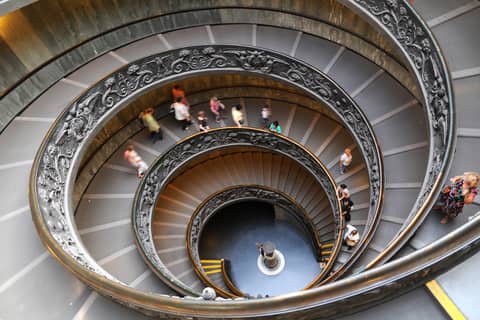 Want a closer look? Vatican: Museums & Sistine Chapel Entrance Ticket, from $36See times →
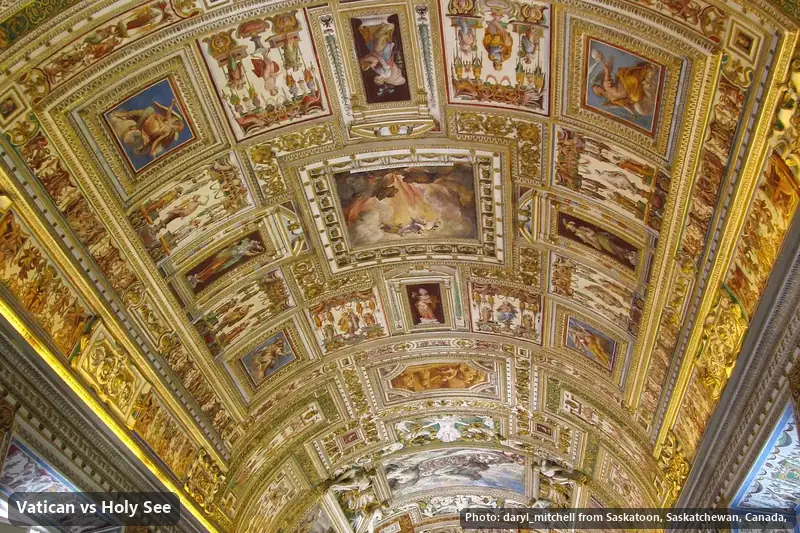
The Vatican and Holy See: Key Differences
The key differences come down to this: the Holy See is an authority, while Vatican City is a territory. Tradition places the founding of the Holy See, the older of the two, in the first century with Saint Peter and Saint Paul. The state arrived much later, in 1929.
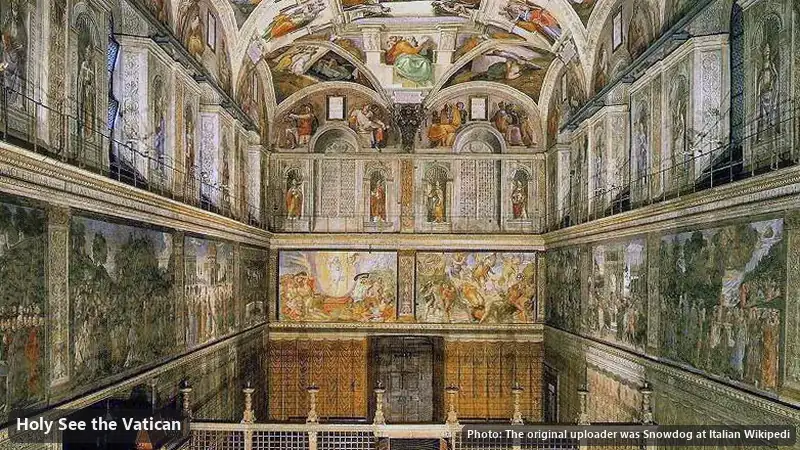 Book aheadVatican: Museums & Sistine Chapel Entrance TicketCheck availability · from $36
| Point | Holy See | Vatican City |
|---|---|---|
| What it is | Central governing body of the Catholic Church | Independent city-state inside Rome |
| Founded | First century, by Catholic tradition | Inception 1929-02-11 |
| Led by | The pope, with the Roman Curia | The pope, as elected monarch and head of state |
| Diplomats | Papal nuncios represent it | Not represented by nuncios |
| Can you visit it? | No, it is not a place | Yes, museums, basilica and square |
The table follows the explanation on Wikipedia, which says papal nuncios represent the Holy See and not the Vatican City State. That detail is the cleanest proof that they are separate. I often use it when someone asks me why two names exist.
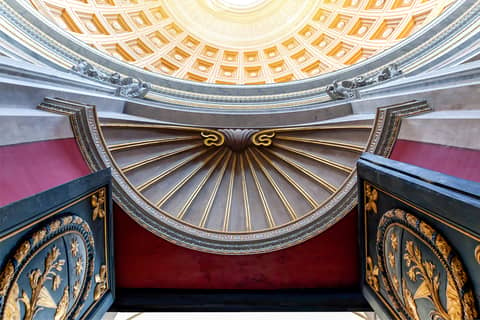 Skip the ticket line: Rome: Vatican Museums & Sistine Chapel Skip-The-Line Ticket, from $32Check dates →
Why Is the Vatican Called the Holy See?
The Vatican is called the Holy See because people borrow the Church’s governing name as a nickname for its home. Wikipedia notes that the Holy See is often referred to metonymically as the “Vatican,” so one name stands in for the other. That is a habit of speech, not a legal fact.
The words themselves are old. The Holy See’s Latin name is Sancta Sedes, meaning “Holy Chair.” The word “see” comes from the Latin sedes, meaning “seat,” and it points to the bishop’s throne, called the cathedra.
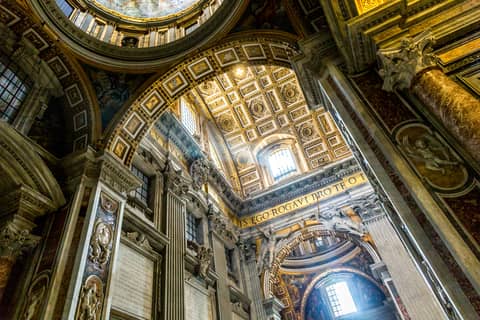
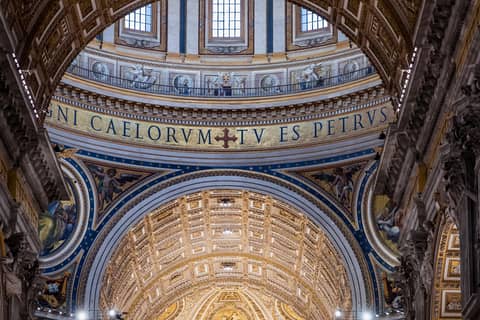
Here is a surprise that helps visitors. The Holy See’s actual cathedral is not St. Peter’s. Wikipedia says the cathedral of the Holy See is the Archbasilica of Saint John Lateran in Rome. St. Peter’s is the church most linked with the papacy, but it is not the pope’s cathedral.
“'Holy Chair', Ecclesiastical Latin pronunciation: [ˈsaŋkta ˈsedes]; Italian: Santa Sede [ˈsanta ˈsɛːde]), also called the See of Rome, the Petrine See or the Apostolic See, is the central governing body of the Catholic Church and Vatican City.”
If you want a fuller picture of the Church’s most famous buildings, my guide to the Vatican church walks through them one by one. It also helps you decide which building to see first.
 Short on time? Vatican Museums, Sistine Chapel & St Peter's Basilica Tour, from $77Book a slot →
How the Lateran Treaty Created the Vatican City State
The Lateran Treaty of 1929, an agreement between the Holy See and the Kingdom of Italy, created the Vatican City State. Wikipedia says its aim was to secure the temporal, diplomatic and spiritual independence of the papacy. Put simply, the pope needed a small piece of ground that no other government ruled.
This is why the two names exist side by side. The Holy See was already there, with its long history. The state was built later to give it a safe base. The Holy See would still exist as an entity without the land, but the land gives it a seat.
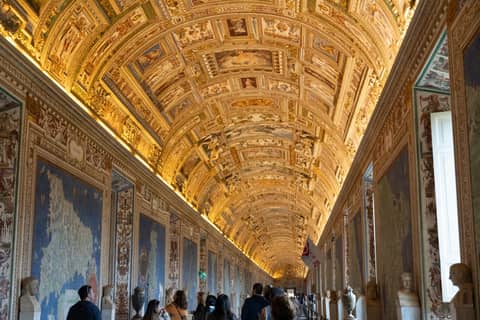
For a traveler, the date matters in one way. The visitor sites you see today, from the square to the museums, sit inside a state that is under a century old, even though the collections inside are far older. Michelangelo’s ceiling is much older than the state around it.
 Prefer a guide? Vatican Museums & Sistine Chapel Skip-the-Ticket-Line Tour, from $110See tours →
Who Runs the Holy See the Vatican Today?
The pope runs the Holy See the Vatican, with help from the Roman Curia. The November 2026 official homepage shows that the pope is Leo XIV, and Wikidata lists Leo XIV as head of state of Vatican City. Both roles rest with one person.
The day-to-day work is spread across departments. Wikipedia says the Roman Curia is the central institution assisting the pope, and it includes dicasteries that work like ministries. The Cardinal Secretary of State is its chief administrator, and papal elections are carried out by members of the College of Cardinals.
Vatican City has its own government role too. Wikidata names Raffaella Petrini as head of government. That is separate from the Church’s Curia, which is another sign of the split between state and Holy See.
For more on the papacy and its offices, browse the Pope & Holy See topic hub. If you want to follow the person at the top, read about Pope Leo XIV’s role at the Holy See. To see the older idea behind the office, I’d also read about the papal see as an institution.
 Planning ahead? Rome: Castel Sant'Angelo Entry Ticket & Audio App, from $25Check availability →
Why Is the Holy See Not Just Another Country at the UN?
The Holy See at the UN does not behave like an ordinary country, because it is a church authority first and a state second. Wikipedia says it keeps bilateral diplomatic relations with 180 sovereign states and signs concordats and treaties. It also takes part in diplomacy with international bodies.
Wikipedia lists the United Nations and its agencies, the Council of Europe, the European Union, the Organization for Security and Co-operation in Europe, and the Organization of American States. Those relations run through papal nuncios, who represent the Holy See, not Vatican City.
This is the part most travelers never see. You will not notice any of it from the square. But it explains why an ambassador to a country may be a “nuncio of the Holy See” while the Vatican’s postal stamps, coins and museums belong to the city-state.
For news on this side of the Church, the Press Office publishes a daily bulletin. The Holy See homepage links straight to the Press Office bulletin, and my page on the Holy See Press Office explains how to read it.
 Most booked this week: Vatican & St Peter’s Basilica: Must-Sees in 3 Hrs, from $110See prices →
Holy See the Vatican by the Numbers
The Holy See the Vatican numbers are a handful of official figures that show how small the state is and how large the authority behind it is. I’d keep them in mind when you plan a visit.
- Area: 0.44 km². You can cross it on foot, which is why one day is enough for the main sights.
- Founded: 11 February 1929, the year of the Lateran Treaty period that created the state.
- Population: 949 in 2024. Most people you see inside are visitors and staff, not residents.
- Heritage status: World Heritage Site. That protects the whole city-state, not just one building.
- Languages: Italian and Latin for Vatican City, and Latin for the Holy See. Expect signs in Italian and English.
- Currency: euro. You pay as you would in Rome.
- Internet domain and calling code: .va and +379. Official pages end in .va.
These numbers also show why the word “country” fits badly. A territory of 0.44 km² with 949 residents is a city-state, while the Holy See reaches Catholics everywhere.
Best value pick: Vatican: Museums & Sistine Chapel Entrance Ticket, from $36View dates →Where Is the Holy See and Can You Visit It?
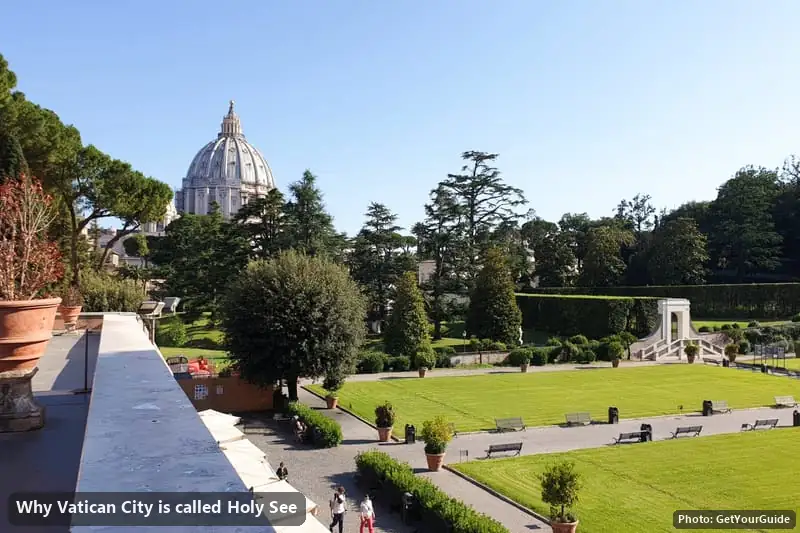
The Holy See’s location is not a place you can enter, but you can visit the city-state where it sits. Wikidata gives coordinates of about 41.903, 12.453, which is Vatican City in the west of Rome. The Holy See’s official site is vatican.va.
If you are asking where the Holy See is located, the practical answer is “St. Peter’s Square and the buildings around it.” Three places matter most for visitors, and the map below shows them.
Vatican Museums
Art museum · ★ 4.6 · 213,480 Google reviews
00120 Città del Vaticano, Vatican City
Opening hours
- Friday8 am–8 pm
- Monday8 am–8 pm
- Saturday8 am–8 pm
- SundayClosed
- Thursday8 am–8 pm
- Tuesday8 am–8 pm
- Wednesday8 am–8 pm
Saint Peter’s Basilica
Basilica · ★ 4.8 · 185,703 Google reviews
Piazza San Pietro, 00120 Città del Vaticano, Vatican City
Opening hours
- Friday7 am–7:10 pm
- Monday7 am–7:10 pm
- Saturday7 am–7:10 pm
- Sunday7 am–7:10 pm
- Thursday7 am–7:10 pm
- Tuesday7 am–7:10 pm
- Wednesday7 am–7:10 pm
The Vatican Museums and the Sistine Chapel list opening hours of 8 am to 8 pm Monday through Saturday and are closed on Sunday, according to the Maps data for each place. St. Peter’s Basilica is listed from 7 am to 7:10 pm every day. Opening times and last-entry rules change, so confirm them on the official Vatican Museums site before you go.
For the Church’s own online home, the official channel is the Holy See’s main site. I explain what you will find there in my guide to the official website of the Holy See.
Going with family? Rome: Vatican Museums & Sistine Chapel Skip-The-Line Ticket, from $32Compare tickets →How to See the Vatican in Person
The best way to see the Vatican is to book a timed ticket for the Museums and the Sistine Chapel, then visit St. Peter’s Basilica separately. Reviewers say the wait without a skip-the-line ticket can run long, which is why I’d book ahead. For a full plan, my page on how to see the Vatican lays out the order.
One reviewer wrote that “the only way to visit the Vatican Museums are with a skip the line ticket,” and added that you can spend around four hours inside if you want to enjoy it properly. I would plan for half a day, not an hour.
“The only way to visit the Vatican Museums are with a skip the line ticket, because you will spend around 4h in the museum if you want to enjoy it properly, but if you don't have a skip the line ticket, add at least 2-3 hours of waiting in line. A line that is literally at least 100 m long”
Here is how I’d choose, based on the tour data in the brief. If you want to explore alone, a ticket-only option such as the entrance ticket suits you. The first option includes an audio guide if you select it, and travelers say timed entry makes access easier. If you want stories and context, a small-group tour is better.
Not sure which option fits? Where to buy Vatican tickets? is the question my homepage answers, with every ticket type side by side. Below are four options I’d compare first.
Vatican: Museums & Sistine Chapel Entrance Ticket
Powered by GetYourGuide · affiliate link
Rome: Vatican Museums & Sistine Chapel Skip-The-Line Ticket
Powered by GetYourGuide · affiliate link
Guided options with Basilica access
Guided options with Basilica access make the most sense when you want to understand why this city-state exists. The City Wonders tour includes the Museums, the Sistine Chapel and St. Peter’s Basilica with a guide, and you choose between a 10-person and a 20-person group. The listing also notes that Basilica access is not available on Wednesday mornings.
The Gray Line tour limits groups to 20 people and highlights the Raphael Rooms and the School of Athens. If you want to know where each name fits, a guide can tell you which room belongs to the papal story and which belongs to the art story.
Vatican Museums, Sistine Chapel & St Peter's Basilica Tour
Powered by GetYourGuide · affiliate link
Vatican Museums & Sistine Chapel Skip-the-Ticket-Line Tour
Powered by GetYourGuide · affiliate link
I’d pick one of the guided tours if you are short on time, since a guide cuts out the hunting for the next gallery. If you prefer to go alone, the ticket-only options above give you more freedom.
Want a closer look? Vatican Museums, Sistine Chapel & St Peter's Basilica Tour, from $77See times →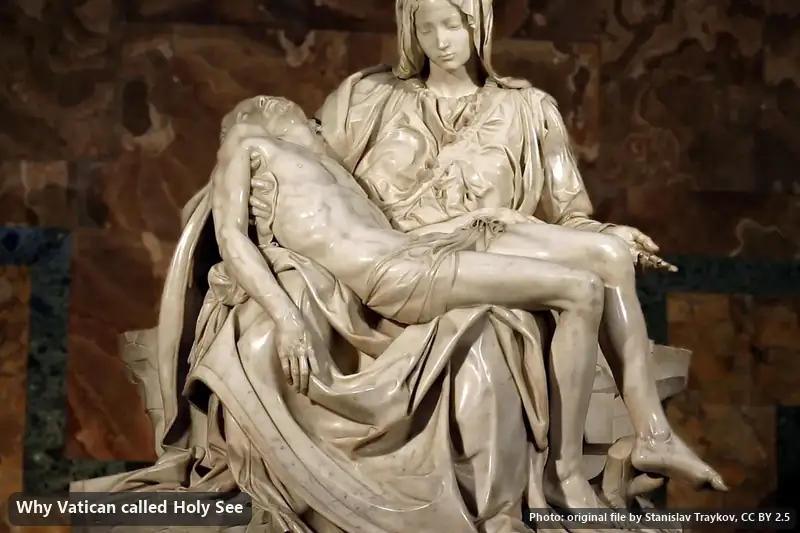
What You Can See Inside Vatican City
Vatican City sights worth your time include the three places most tied to the Holy See: the Basilica, the square and the Museums. The Sistine Chapel sits on the Museums route, and the entrance ticket listing highlights Michelangelo’s The Creation of Adam there.
St. Peter’s Basilica is free to enter, though access can vary with crowd control, according to the entrance ticket listing. One Maps reviewer said they arrived at 6:45 am, saw a line, but got in quickly, and that a free visit can take about 40 minutes. Early arrival is the easy fix for the queue.
“Do not miss this place for a FREE location! This is the most beautiful church I've ever been to. Once your through security and the main doors, you are truly hit by the size and artwork. We got there 645am and already there's a line but got in very quickly. If your just there for free visit, you can see most of it in 40mins. Pay extra for the other locations.”
The Basilica also holds daily Masses. The official Basilica page lists weekday Masses at 7:00, 7:30, 8:30, 9:00, 10:00, 11:00 and 12:00 in the morning and midday, then at 5 p.m. and 6 p.m. Holiday Masses follow a different schedule, so check the same page before you plan around a service.
Seeing the pope
Seeing the pope does not require a museum ticket, but it does require a separate request. The Holy See homepage links to tickets for papal audiences and celebrations. It also lists the General Audience on 4 November 2026 as a recent event, so those gatherings are held regularly.
I would book these through the official page and nobody else. Papal events depend on the pope’s travel too. The homepage lists an apostolic journey to Uruguay, Argentina and Peru from 6 to 17 November 2026, so he may be away on some dates.
Skip the ticket line: Vatican Museums & Sistine Chapel Skip-the-Ticket-Line Tour, from $110Check dates →Nearby Sights Connected to the Papacy
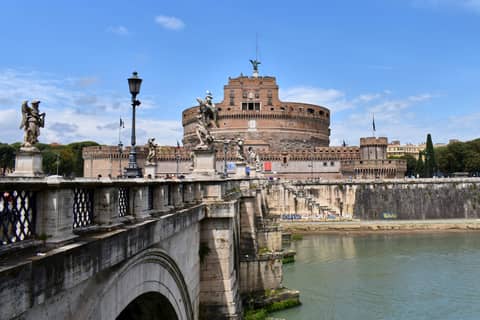
Sights connected to the papacy extend beyond the city-state’s walls. Castel Sant’Angelo, a short walk away, was a papal fortress, and the entry ticket listing says visitors see papal rooms on the upper floors and a collection of weapons that shows its defensive role. It suits readers who want the political side of the papacy, not only the art.
Rome: Castel Sant'Angelo Entry Ticket & Audio App
Powered by GetYourGuide · affiliate link
After that, a meal near the Vatican helps. Ristorante Pizzeria Castello on Via delle Fornaci is listed with a 4.7 rating from 18,643 reviews and opens 11 am to 11 pm daily, according to the Maps data. It is a short walk from the Basilica side of the district.
If you are curious about the name itself, my page on holy Vatican covers why people attach “holy” to so many places in this area. The related page on the holy Vatican City looks at the same idea from the city side.
Short on time? Rome: Castel Sant'Angelo Entry Ticket & Audio App, from $25Book a slot →Planning Your Visit to the Holy See the Vatican
Planning your visit starts with three facts: the Holy See is not a place, Vatican City is, and the Museums are closed on Sundays. A good first visit has a timed Museums and Sistine Chapel ticket, a separate stop at the Basilica, and the official website open on your phone for any changes.
Here is my short checklist:
- Decide whether you want art, the Church’s story, or both. Art points to the Museums, and the story points to the Basilica and a guide.
- Book a timed ticket for the Museums and Sistine Chapel, and arrive inside your slot. The meeting point differs by tour, so read your voucher.
- Visit the Basilica early, since a reviewer reported a line even at 6:45 am.
- Confirm hours and closures on the official Vatican Museums site and the Holy See homepage before you leave.
- Keep the right word in mind. If you mean the Church’s government, say “the Holy See.” If you mean the place, say “Vatican City.”
I hope that clears up the question behind holy see the vatican for good. Once you know the split, the signs, the news and the tickets all make more sense, and you can enjoy the visit instead of decoding it.
Prefer a guide? Vatican & St Peter’s Basilica: Must-Sees in 3 Hrs, from $110See tours →Top-rated Vatican tickets and tours
Vatican: Museums & Sistine Chapel Entrance Ticket
Powered by GetYourGuide · affiliate link
Rome: Vatican Museums & Sistine Chapel Skip-The-Line Ticket
Powered by GetYourGuide · affiliate link
Vatican Museums, Sistine Chapel & St Peter's Basilica Tour
Powered by GetYourGuide · affiliate link
Frequently asked questions
What is the best way to see the Vatican?
I'd book a timed entry ticket for the Vatican Museums and the Sistine Chapel, because travelers report long waits without one. Tours that add a guide or Basilica access suit people who want the stories behind the art. The Basilica itself is free to enter, but access can change with crowd control.
What is the latest news on Pope Leo today?
The official Holy See homepage lists the pope's latest events, messages and the Press Office daily bulletin. Pope Leo XIV is shown there as the current pope. Check that page for anything dated today.
Holy See country population: how many people live there?
The Holy See itself is not a country with residents. Wikidata lists a population of 949 for Vatican City in 2024. That figure belongs to the city-state, not to the worldwide Church.
What time are Holy Masses in St. Peter's Basilica?
The Basilica's official page lists weekday Masses from 7:00 a.m. through 6 p.m., at the Altar of St. Joseph and the Altar of the Cathedra. Holiday times differ, so check the Basilica's page before you plan around a Mass.
Can you see the pope at the Vatican?
The Holy See homepage links to ticket requests for papal audiences and celebrations. You reserve those through the official page, not through a museum ticket. Dates depend on the pope's schedule.
Keep planning your visit
More The Pope & Holy See guides
Online Vatican Tickets is an independent visitor guide. Prices and hours change: check the official Vatican Museums website before you go. Tour links are GetYourGuide affiliate links.