In this guide ▾
Vatican Catholic is a phrase people use for two things at once: the Vatican as the center of the Roman Catholic Church, and the Vatican as a place you can walk into and see. This page covers both. I will explain what the Vatican is, how it relates to the Church, who is allowed in, what the dress code means and which tickets make a visit smooth.
I am Giulia Romano, and I write visitor guides to the Vatican. My aim here is simple: give you the facts you need to understand the Vatican Catholic world before you arrive, then help you choose the right way to enter.
Is the Vatican Catholic?
The Vatican is Catholic at its core, so the answer is yes. Vatican City State houses the Holy See, which the Vatican’s own state website calls the “Sovereign Body of the Catholic Church.” Both the Holy See and the State are recognized as having distinct international personalities.
That sounds technical, so here is the plain version. The Church is a global religious body. Vatican City is the small territory that gives that body a base, a government and a place for the pope to live and work. When people search for the Vatican Catholic connection, this is the link they want: one is the faith community, the other is the land.
The same page explains who speaks for the State. The Fundamental Law reserves relations with other states and treaties to the Roman Pontiff, who acts through the Secretariat of State. In every other case, the President of the Governorate represents the State.
Holy See and Vatican City are not the same thing
The Holy See and Vatican City are not the same thing, and I find this is the point that confuses people most. The Holy See is the Church’s governing authority, while Vatican City State is the country. They work together, but they are two separate legal entities, and each took part in international life on its own terms.
For a visitor, the distinction matters little at the door. It matters when you read the news or wonder who runs the museums, the post office or the gardens. The Governorate runs the State, and the pope leads the Church.
If you want a wider look at the building most people picture, I cover that in my guide to the Vatican church and in the hub on the pope and the Holy See.
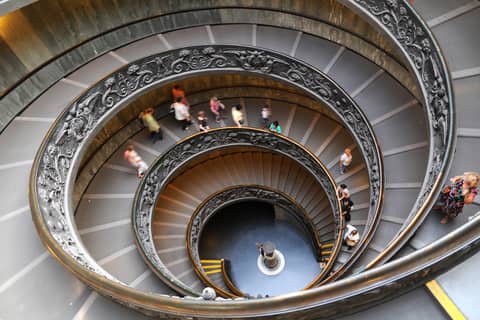 Want a closer look? Vatican: Museums & Sistine Chapel Entrance Ticket, from $36See times →
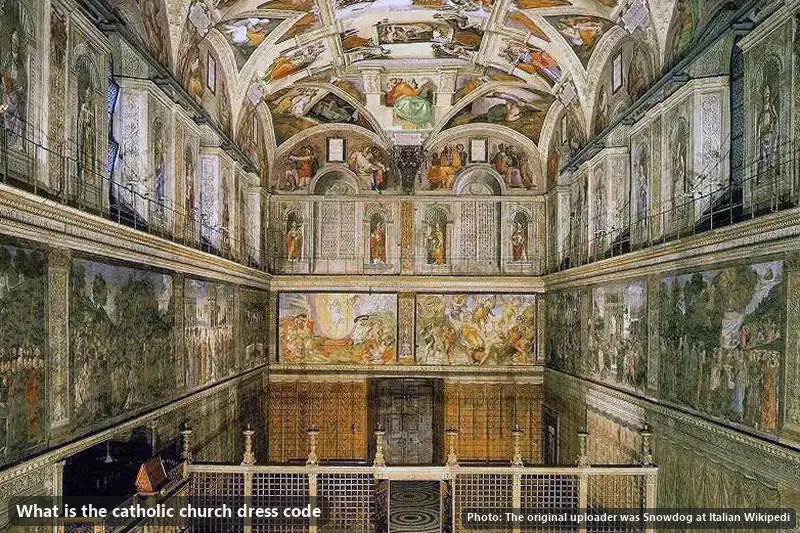
Vatican Catholic by the Numbers
Vatican Catholic numbers show how small this Catholic center really is. Each figure below comes from Wikidata’s record for Vatican City.
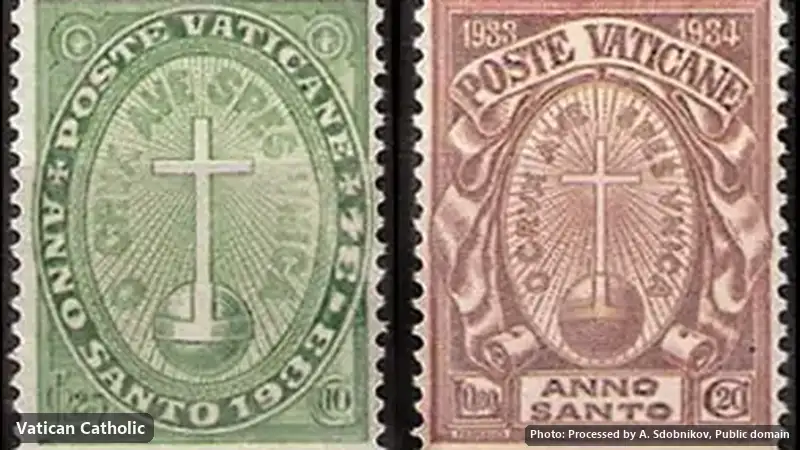 Book aheadVatican: Museums & Sistine Chapel Entrance TicketCheck availability · from $36
- Area: 0.44 km². The whole state is smaller than most city parks. You can cross it on foot, though the museums alone take hours.
- Inception: 11 February 1929. That is the date Wikidata gives for the State’s founding. The Vatican Catholic story is far older, but the modern state is under a century old.
- Population: 949 (2024). A population this small means most people you meet inside the walls are visitors.
- Currency: euro. You pay in euros at the Vatican Post Office, cafés and shops.
- Official languages: Italian and Latin. Signs for visitors are in several languages, but Latin remains the language of official texts.
- Head of state: Leo XIV. The pope leads both the State and the Church.
- Heritage designation: World Heritage Site. The designation is one reason strict visitor rules apply to the collections.
Together these numbers explain why the Vatican feels crowded even on a quiet day. A tiny territory holds some of the most visited art and architecture in the world.
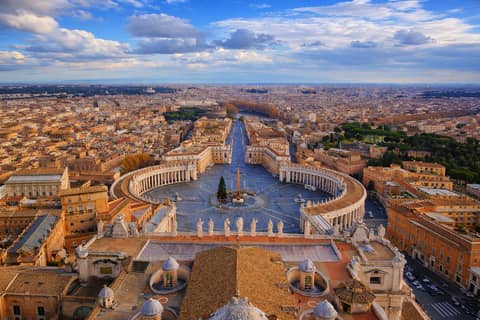 Skip the ticket line: Rome: Vatican Museums, Sistine Chapel & Basilica Tour, from $71Check dates →
Do You Have to Be Catholic to Go to the Vatican?
You do not have to be Catholic to enter the Vatican Museums, the Sistine Chapel or St. Peter’s Basilica. The official visitor rules call for appropriate dress and respectful behavior, not religious proof.
The official visitor information says entry to the Museums, the Sistine Chapel, St. Peter’s Basilica and the Vatican Gardens is permitted only to appropriately dressed visitors. It also asks visitors to avoid visible objects or signs that “may offend Catholic morality, the Catholic religion and common decency.” That is a respect rule, and it applies to everyone.
Many visitors of other faiths and of no faith come for the art. The Raphael Rooms, the Gallery of Maps and Michelangelo’s ceiling all started as Catholic commissions, so some knowledge of the faith makes them more rewarding. But no one checks what you believe.
What respect looks like in practice
Respect at the Vatican means treating it like a working church, which is what I tell friends, because St. Peter’s Basilica is one. Keep your voice low, do not pose for loud photos in prayer areas and follow staff directions. The Sistine Chapel is also a sacred space, so expect staff to ask for quiet.
 Short on time? Vatican Museums, Sistine Chapel & St. Peter's Basilica Tour, from $60Book a slot →
What Is the Vatican Catholic Dress Code?
The Vatican Catholic dress code is simple: cover your shoulders and knees, and take off your hat. The official rules ban sleeveless or low-cut garments, shorts above the knee, miniskirts and hats.
This is the point where I see the most turned-away visitors, so here is a quick reference.
- Sleeveless or low-cut tops: not permitted at any of the four sites.
- Shorts above the knee and miniskirts: not permitted, so choose knee-length or longer.
- Hats: not permitted, so remove them before entering.
- Visible tattoos or signs that offend Catholic morality: cover them if they might offend.
- Large bags, rucksacks, knives and scissors: these go in the free cloakroom.
A light scarf or a long-sleeved layer in your bag solves most problems. In summer, I would wear linen trousers or a long skirt rather than hope the rules are relaxed. They are not.
Pets are not allowed in the Vatican Museums, except guide dogs for blind or partially sighted visitors (with a muzzle and lead) and animals certified for pet therapy.
 Prefer a guide? Vatican Museums & Sistine Chapel Skip-the-Line Entry Ticket, from $53See tours →
Which Vatican Catholic Sites Can You Visit?
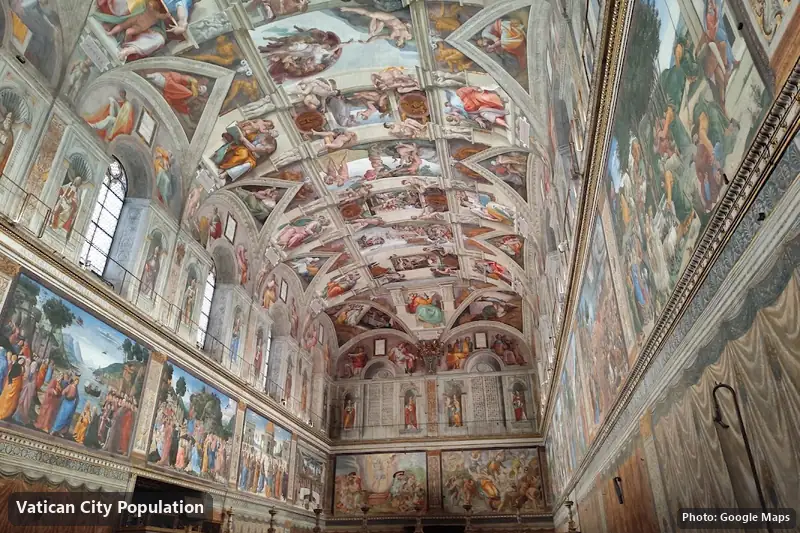
Vatican Catholic sites worth visiting come down to three core places: the Vatican Museums, the Sistine Chapel and St. Peter’s Basilica. The Museums and the Sistine Chapel share one ticket, while the basilica is a separate church that is free to enter.
The Vatican Museums are the largest part of the trip. Google Maps lists them as open 8 am to 8 pm Monday to Saturday and closed on Sunday, but the official site is the place to confirm hours, since they change. The Sistine Chapel sits at the end of the Museums route and has the same listed hours.
The basilica is easier on the calendar. Google Maps shows it open 7 am to 7:10 pm every day. It has its own official site for ceremonies and closures.
Vatican Museums
Art museum · ★ 4.6 · 213,480 Google reviews
00120 Città del Vaticano, Vatican City
Opening hours
- Friday8 am–8 pm
- Monday8 am–8 pm
- Saturday8 am–8 pm
- SundayClosed
- Thursday8 am–8 pm
- Tuesday8 am–8 pm
- Wednesday8 am–8 pm
Saint Peter’s Basilica
Basilica · ★ 4.8 · 185,703 Google reviews
Piazza San Pietro, 00120 Città del Vaticano, Vatican City
Opening hours
- Friday7 am–7:10 pm
- Monday7 am–7:10 pm
- Saturday7 am–7:10 pm
- Sunday7 am–7:10 pm
- Thursday7 am–7:10 pm
- Tuesday7 am–7:10 pm
- Wednesday7 am–7:10 pm
Where the Catholic history shows
Vatican Catholic history is easiest to read in stone and paint if you follow this order. Start with the Museums for the papal collections. Go through the Sistine Chapel for Michelangelo’s The Creation of Adam and The Last Judgment. Finish in St. Peter’s Basilica for the Pietà.
For a closer look at how Catholic worship and Vatican City fit together, see my page on the Catholic church in Vatican City. If you are curious how that differs from “Roman Catholic” wording, read what Roman Catholic Vatican City means.
 Planning ahead? Rome: Vatican Museums, Sistine Chapel and Basilica Access, from $68Check availability →
How Do You Buy Vatican Catholic Tickets?
Vatican Catholic tickets are best booked online as a timed slot before you go. The simplest way to enter is to reserve an entry slot for the Museums and the Sistine Chapel, and the basilica is free on arrival.
My advice is to compare options once, then book early. You can read about each ticket type and see Vatican tickets side by side on the main guide, where I explain which option suits which kind of visitor.
Here is what the tours I compared actually offer. Prices are what GetYourGuide showed at the time of writing, and they can change.
| Option | Price (USD) | Guide? | Rating |
|---|---|---|---|
| Museums and Sistine Chapel entrance ticket | from $36.21 | No (audio guide if selected) | 4.48 from 160,009 reviews |
| Skip-the-line entry ticket with host at check-in | $53.48 | No | 4.42 from 19,035 reviews |
| Museums, Sistine Chapel and St. Peter’s Basilica tour | $60.17 | Yes | 4.27 from 86,949 reviews |
| Museums, Sistine Chapel and Basilica tour with optional dome | $71.31 | Yes, licensed | 4.65 from 19,481 reviews |
If you want to see the art on your own timetable, I would book the entrance ticket. If you want the Catholic history explained as you walk, I would book a guided tour. Read the listing before you pay, because the basilica part is not always a guided visit.
Vatican: Museums & Sistine Chapel Entrance Ticket
Powered by GetYourGuide · affiliate link
Rome: Vatican Museums, Sistine Chapel & Basilica Tour
Powered by GetYourGuide · affiliate link
Vatican Museums, Sistine Chapel & St. Peter's Basilica Tour
Powered by GetYourGuide · affiliate link
One traveler put the entrance ticket plainly:
“value for money. I am glad that I choose this option. really helpful. thank you”
Tickets and times change, so confirm them on the official Vatican Museums visitor page before you commit.
 Most booked this week: Rome: Vatican Museums & Sistine Chapel Skip-The-Line Ticket, from $32See prices →
Vatican Catholic Entry Rules and What to Bring
Vatican Catholic entry rules are easy to meet if you bring a photo ID, a small bag and layers. The Museums ask visitors to leave luggage, suitcases, rucksacks and packages that staff consider too large in the cloakroom, which is free of charge.
If you plan to see the basilica after the Museums, do not leave bags in the Museums cloakroom. The official page reminds visitors who continue to the basilica not to leave their baggage there. Knives, scissors and metal tools must also go in the cloakroom for safety and to protect the art.
Lost something? Report it at the nearest security point. If you have already left, the Museums accept requests by email at the address on the official page. Items not reclaimed by the end of the day go to the Vatican Gendarmerie, and the Museums say they cannot be held responsible for lost belongings.
There are rest areas along the route. The official page names the Courtyard of the Cuirasses, the Courtyard of the Pinacoteca, the Square Garden and the Courtyard of the Pinecone. I would plan a sit-down in one of them, because the Museums route is long.
Best value pick: Vatican: Museums & Sistine Chapel Entrance Ticket, from $36View dates →What Is a Catholic Jubilee, and Does It Change Your Visit?
A Catholic jubilee is a Holy Year of forgiveness and pilgrimage that can bring extra crowds to Rome. In Western Christianity the tradition dates to 1300, when Pope Boniface VIII convoked a holy year, and pilgrims have gone to Rome ever since.
As Wikipedia puts it:
“A jubilee is a special year of remission of sins, debts and universal pardon.”
The most recent ordinary holy year was the Jubilee Year of Hope, which ran from 24 December 2024 to 6 January 2026. The present extraordinary holy year is the Jubilee of St. Francis, which began on 10 January 2026 and ends on 10 January 2027. An extraordinary jubilee is also planned for 2033 to mark the 2,000th anniversary of the death and resurrection of Jesus.
For you, the practical effect is crowds. During a jubilee, more pilgrims join the usual visitors, so I would book timed entry earlier than you think you need. This matters most for the Museums, where entry is by time slot.
You can find the full background in the Wikidata record for the jubilee.
Going with family? Rome: Vatican Museums, Sistine Chapel & Basilica Tour, from $71Compare tickets →Vatican Catholic Beyond the Walls: Castel Gandolfo
Castel Gandolfo and its Papal Palace are part of the Vatican Museums’ offer, and they are worth knowing about if you want a quieter Catholic site. The official Museums site says the ticket for the Papal Palace includes access to all current exhibitions, the Garden of the Moor and the Secret Garden, with a guided or self-guided option.
In 2026 the palace hosts “El Greco in the mirror,” an exhibition that starts from 14 March. According to the Vatican Museums announcement, it pairs the Redeemer from the Apostolic Palace with a small Saint Francis, and it honors Pope Leo XIV in the eighth centenary year of the death of Saint Francis of Assisi.
I mention it because many visitors treat the Vatican as one stop. The Catholic story runs wider than the walls, and the Museums themselves present Castel Gandolfo as part of the same cultural offer. Check the official site for current exhibition dates before you plan a trip there.
Want a closer look? Vatican Museums, Sistine Chapel & St. Peter's Basilica Tour, from $60See times →
Roman Catholic Church Vatican Questions: Quick Answers
Roman Catholic Church Vatican questions come in many close variations, and these are the ones I get most, with links to the page that goes deeper.
Is the church a government? The Church and the State are separate. The State’s own website says the Holy See and Vatican City each have their own international personality, so the legal picture has two layers.
What is the difference between the terms? “Catholic” describes the faith. “Roman Catholic” names the same Church in connection with Rome. If you want the wording explained, read about the Roman Catholic Church and Vatican City and the version without “City,” Roman Catholic Church Vatican.
Is the Vatican a place of worship or a museum? It is both. St. Peter’s Basilica is a working church, and the Museums hold the papal art collections. My page on the Catholic church in Vatican covers how the two roles fit together.
Skip the ticket line: Vatican Museums & Sistine Chapel Skip-the-Line Entry Ticket, from $53Check dates →How to Plan a Respectful Vatican Catholic Visit
A respectful Vatican Catholic visit takes three steps: dress correctly, book a timed ticket and keep a calm pace. That order removes the three problems I see most, which are dress code refusals, sold-out slots and rushed afternoons.
One Google Maps reviewer wrote that the crowds were “brutal” and suggested going after 3 pm, when most cruise ship tours are over. Treat that as one traveler’s experience, not a rule, and check which time slots are open when you book.
“If you can, you need to visit this place. The relics and treasures are just incredible. You definitely need more than one day to take it all in. The crowds are brutal so try and go after 3pm when most of the cruise ship tours are over.”
If you want help with the booking itself, I would start with a guided tour for the history and the entrance ticket for freedom. The tours below cover both styles.
Vatican: Museums & Sistine Chapel Entrance Ticket
Powered by GetYourGuide · affiliate link
Vatican Museums & Sistine Chapel Skip-the-Line Entry Ticket
Powered by GetYourGuide · affiliate link
For your meal, a pizza place near the Vatican, Ristorante Pizzeria Castello, is rated 4.7 on Google Maps and lists daily hours of 11 am to 11 pm.
Short on time? Rome: Vatican Museums, Sistine Chapel and Basilica Access, from $68Book a slot →Final Notes on Visiting the Vatican Catholic Center
The Vatican Catholic center is Catholic in purpose, but it is open to everyone who follows the rules. The Holy See leads the Church, Vatican City State is the 0.44 km² territory that holds it, and the pope serves as head of both.
Before you go, check three things on the official sites: opening hours, the dress code and your timed entry. Wear covered shoulders and knees, leave large bags in the cloakroom and book your slot early. For a broader view of tickets, return to the main guide to Vatican tickets and compare the options once more.
If you want to keep reading, the pope and Holy See hub lists every page on the Church and its leadership. That is the best next step after this guide.
Prefer a guide? Rome: Vatican Museums & Sistine Chapel Skip-The-Line Ticket, from $32See tours →Top-rated Vatican tickets and tours
Vatican: Museums & Sistine Chapel Entrance Ticket
Powered by GetYourGuide · affiliate link
Rome: Vatican Museums, Sistine Chapel & Basilica Tour
Powered by GetYourGuide · affiliate link
Vatican Museums, Sistine Chapel & St. Peter's Basilica Tour
Powered by GetYourGuide · affiliate link
Frequently asked questions
Who is the head of state of Vatican City?
Wikidata lists Leo XIV as head of state of Vatican City. Under the Fundamental Law, the Roman Pontiff represents the State in relations with other states, and he does this through the Secretariat of State.
Is Vatican City a country?
Yes, it is a sovereign city-state of 0.44 km² that was founded on 11 February 1929, according to Wikidata. Its official languages are Italian and Latin, and it uses the euro.
What is a Catholic jubilee?
A jubilee, or Holy Year, is a year of forgiveness and reconciliation in the Catholic tradition. The current extraordinary jubilee, the Jubilee of St. Francis, began on 10 January 2026 and ends on 10 January 2027.
Can I wear shorts to the Vatican?
No. The Vatican Museums do not allow sleeveless or low-cut clothing, shorts above the knee, miniskirts or hats. The same entry rule covers the Sistine Chapel, St. Peter's Basilica and the Vatican Gardens.
Is St. Peter's Basilica open on Sundays?
Google Maps lists the basilica as open from 7 am to 7:10 pm every day of the week, including Sunday. Hours can change for ceremonies, so check the basilica's official site before you go.
Keep planning your visit
More The Pope & Holy See guides
Online Vatican Tickets is an independent visitor guide. Prices and hours change: check the official Vatican Museums website before you go. Tour links are GetYourGuide affiliate links.