In this guide ▾
New Vatican City is a phrase people use for two different things: the modern state that appeared in 1929, and whatever is new there right now. I will cover both. You will get the short history, the current facts, what has changed for visitors and how to plan a day there without surprises.
What Does New Vatican City Mean?
New Vatican City refers to the modern Vatican City State, a sovereign state that has existed only since 1929. Wikipedia says the name “Vatican City” was first used in the Lateran Treaty, signed on 11 February 1929. Before that date there was no state with this name.
The “new” part is also about the news cycle. The state publishes announcements on its official news page, from concerts to academic openings to public notices. If you search for new Vatican City updates, that page is where I would start.
The place itself is very old. The name comes from an Etruscan settlement, Vatica or Vaticum, and the Romans used “Ager Vaticanus” for the marshy area on the west bank of the Tiber. What is new is the legal status, not the hill.
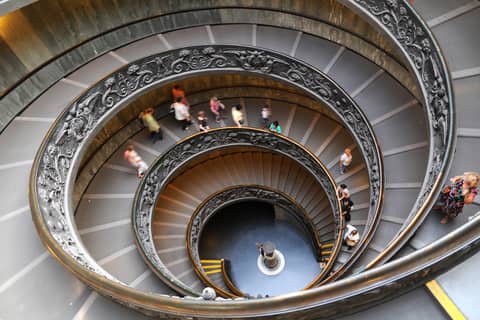 Want a closer look? Vatican: Museums & Sistine Chapel Entrance Ticket, from $36See times →
When Did the New Vatican City State Begin?
The new Vatican City State began on February 11, 1929, when the Lateran Treaty took effect. According to Wikidata, its inception date is 1929-02-11. The treaty settled what Wikipedia calls the “Roman question.”
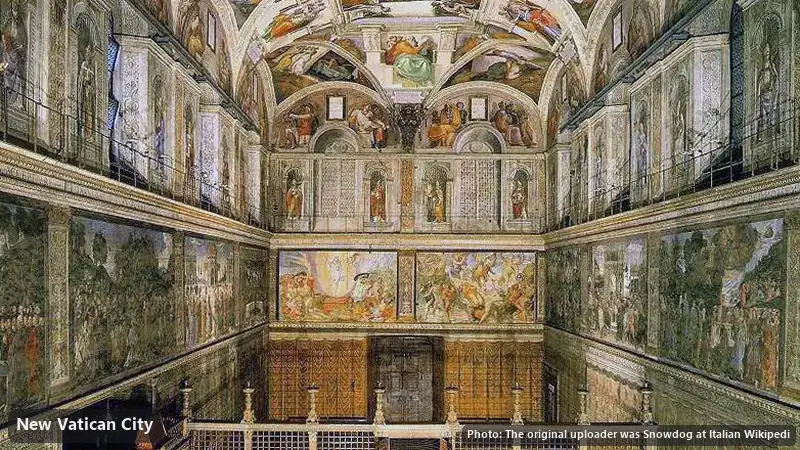 Book aheadVatican: Museums & Sistine Chapel Entrance TicketCheck availability · from $36
That question started in 1870. The Kingdom of Italy captured Rome, and the pope declared himself a “prisoner in the Vatican.” For 59 years the situation stayed unresolved, until the treaty created the modern sovereign state.
I find it helpful to see the steps in order. This table uses dates from the Wikipedia article on Vatican City.
| Year | What happened | Why it matters |
|---|---|---|
| 1st century AD | Catholic theology holds that Saint Peter was crucified on Vatican Hill | The site’s religious importance |
| 756 | Papal States form with the donation of Frankish territory | The Holy See gains temporal power |
| 1377 | The pope returns to Rome after the Avignon Papacy | Rome becomes the center again |
| 1870 | The Kingdom of Italy captures Rome | The pope becomes a “prisoner in the Vatican” |
| 1929 | The Lateran Treaty is signed | The modern Vatican City State is created |
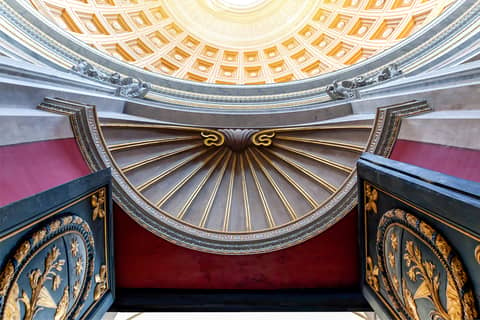 Skip the ticket line: Rome: Vatican Museums & Sistine Chapel Skip-The-Line Ticket, from $32Check dates →
How Did the Papal States Turn Into the Modern State?
The Papal States became the modern state through a single negotiated settlement rather than slow change. They covered a large part of the Italian Peninsula. After 1870 they were gone, and the 1929 treaty replaced them with a very small territory.
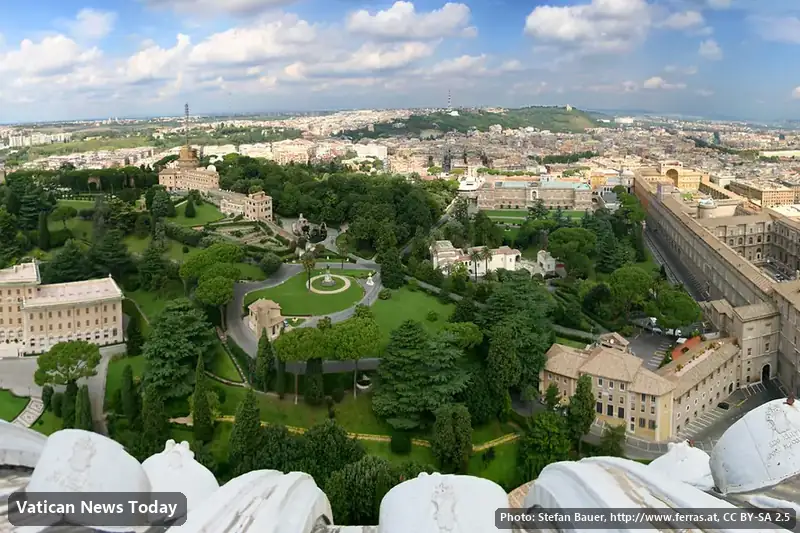
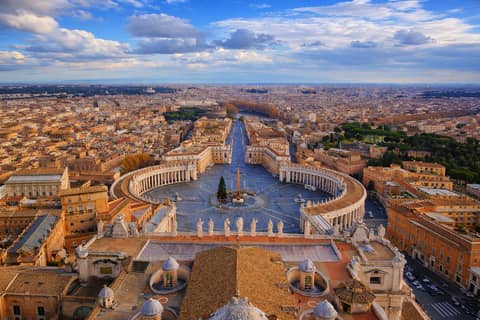
The size difference is the surprise for most visitors. The old papal territory was a regional power. The new Vatican City covers 0.44 square kilometers according to Wikidata, which is why you can cross it on foot.
If you want to see what the Church’s own building boom looks like today, my page on the new Vatican church covers the newer end of the story. It pairs well with this one.
 Short on time? Vatican Museums & Sistine Chapel Skip-the-Line Entry Ticket, from $53Book a slot →
Is the New Vatican City a Real Country?
New Vatican City is a real country in the legal sense, a sovereign state, though an unusual one. It is an absolute monarchy under the pope, who is elected by the College of Cardinals through conclaves. The pope delegates authority to the Pontifical Commission for Vatican City State, which acts as the state’s legislative body.
Two names are often mixed up. Vatican City is the territory and state. The Holy See is the central authority of the Catholic Church, and it is a sovereign entity under international law. On behalf of Vatican City, the Holy See keeps diplomatic relations with 180 states and is an observer state of the United Nations.
Other practical details help the picture. The state uses the euro and issues its own euro coins. It is also a de facto member of the Schengen Area, which is why you walk in from Rome without a border checkpoint. You still go through security at the Museums and the Basilica.
 Prefer a guide? Vatican Museums, Sistine Chapel & St. Peter's Basilica Tour, from $60See tours →
New Vatican City by the Numbers
New Vatican City by the numbers comes from Wikidata’s Vatican City entry, and I have added what each figure means for a trip.
- Area: 0.44 km². The whole state is walkable, but the Museums alone take hours.
- Population: 949 (2024). Few people live here, so most of the crowds you see are visitors.
- Inception: 1929-02-11. This is the date of the modern state.
- Heritage designation: World Heritage Site. The whole city-state is protected.
- Head of state: Leo XIV. The pope leads the state; the head of government is Raffaella Petrini.
- Currency: euro. Bring a card or euros for the cafés and shops.
- Country calling code: +379. Handy if you need to dial an office in the state.
The time zone is Central European Time, UTC+01:00. The top-level internet domain is .va, which helps you spot official sites.
 Planning ahead? Rome: Vatican Museums, Sistine Chapel & Basilica Tour, from $71Check availability →
Who Runs the Vatican City State Today?
The Vatican City State is run by Leo XIV as head of state and Raffaella Petrini as head of government, per Wikidata. The pope rules the state, and he delegates day-to-day authority to the Pontifical Commission for Vatican City State.
For a visitor, this matters in one practical way. The state publishes its own notices, and the Directorate of Museums and Cultural Heritage speaks for the Museums. When something is official, it appears on a .va site, so I always check those first. My overview of Vatican museums news shows how to follow those announcements without wading through rumor.
 Most booked this week: Rome: Vatican Museums, Sistine Chapel and Basilica Access, from $68See prices →
What Is New for Visitors Right Now?
What is new for visitors is best shown by the latest official notice I can find, dated November 5, 2026. The Governorate of Vatican City State said that “Michelangelo’s Sistine Chapel Exhibition” is not authorized, endorsed or sponsored by its Directorate of Museums and Cultural Heritage. You can read the statement on the official news page.
The notice says the traveling photographic exhibition was in London from May 19 to September 6, 2026, and is being shown in Columbus (OH), South Jersey (NY) and Las Vegas (NV). My advice: if you see an ad for that show, know that it is not the Sistine Chapel and has no official link to the Museums.
The same news page also lists a concert by the bands of the Vatican Gendarmerie and the Carabinieri of Italy, held in Rome. It is a reminder that the state has a cultural calendar, but I would not plan a trip around it.
Best value pick: Vatican: Museums & Sistine Chapel Entrance Ticket, from $36View dates →
How Do You Visit the New Vatican City Without Wasting a Day?
Visiting the new Vatican City goes best if you choose the two or three places you care about most and book them first. The state is tiny, yet its main sights are far apart in walking time and queues. The three big ones are the Vatican Museums, the Sistine Chapel and St. Peter’s Basilica.
Vatican Museums
Art museum · ★ 4.6 · 213,480 Google reviews
00120 Città del Vaticano, Vatican City
Opening hours
- Friday8 am–8 pm
- Monday8 am–8 pm
- Saturday8 am–8 pm
- SundayClosed
- Thursday8 am–8 pm
- Tuesday8 am–8 pm
- Wednesday8 am–8 pm
Saint Peter’s Basilica
Basilica · ★ 4.8 · 185,703 Google reviews
Piazza San Pietro, 00120 Città del Vaticano, Vatican City
Opening hours
- Friday7 am–7:10 pm
- Monday7 am–7:10 pm
- Saturday7 am–7:10 pm
- Sunday7 am–7:10 pm
- Thursday7 am–7:10 pm
- Tuesday7 am–7:10 pm
- Wednesday7 am–7:10 pm
Sistine Chapel
Catholic church · ★ 4.7 · 98,723 Google reviews
00120 Città del Vaticano, Vatican City
Opening hours
- Friday8 am–8 pm
- Monday8 am–8 pm
- Saturday8 am–8 pm
- SundayClosed
- Thursday8 am–8 pm
- Tuesday8 am–8 pm
- Wednesday8 am–8 pm
Here is how the opening times look in map listings. The Museums and the Sistine Chapel are listed as open 8 am to 8 pm Monday to Saturday and closed on Sunday. St. Peter’s Basilica is listed from 7 am to 7:10 pm every day. Hours change, so confirm them on the official Vatican Museums site before you go.
A traveler at the Basilica gave a useful picture of the free visit:
“Do not miss this place for a FREE location! This is the most beautiful church I've ever been to. Once your through security and the main doors, you are truly hit by the size and artwork. We got there 645am and already there's a line but got in very quickly. If your just there for free visit, you can see most of it in 40mins. Pay extra for the other locations.”
That matches my advice. Go early, expect a security line, and treat the free Basilica visit as a short stop. Save your main time for the Museums.
Going with family? Rome: Vatican Museums & Sistine Chapel Skip-The-Line Ticket, from $32Compare tickets →Where Should You Book New Vatican City Tickets?
New Vatican City tickets are best booked as a timed entry or a guided tour before you travel, since the Museums run on time slots. If you want to compare every ticket type side by side, start with Vatican tickets online and pick the one that fits your pace. Prices and availability change, so confirm the details on the official site.
Here are the options I would look at first. They are listed on GetYourGuide, which is an independent booking platform, and we are not the official ticket office.
Vatican: Museums & Sistine Chapel Entrance Ticket
Powered by GetYourGuide · affiliate link
Rome: Vatican Museums & Sistine Chapel Skip-The-Line Ticket
Powered by GetYourGuide · affiliate link
Vatican Museums & Sistine Chapel Skip-the-Line Entry Ticket
Powered by GetYourGuide · affiliate link
The first listing is a skip-the-ticket-line entry with a dedicated GetYourGuide entrance, and its page shows a rating of 4.48 from 160,009 reviews. Its details say you go directly to the Museums entrance on Viale Vaticano, show your ticket, and scan it at the CASSA ONLINE E GRUPPI box office after security. The listing also says not to arrive outside your assigned time slot.
One reviewer from Ireland said it was good value:
“value for money. I am glad that I choose this option. really helpful. thank you”
Want a closer look? Vatican Museums & Sistine Chapel Skip-the-Line Entry Ticket, from $53See times →Is a Guided Tour Better Than an Entry Ticket?
A guided tour suits you if you want context, while an entry ticket suits you if you want to set your own pace. The tickets above give access only. The tours below add a guide who explains the Museums and the Sistine Chapel.
Vatican Museums, Sistine Chapel & St. Peter's Basilica Tour
Powered by GetYourGuide · affiliate link
Rome: Vatican Museums, Sistine Chapel & Basilica Tour
Powered by GetYourGuide · affiliate link
The Enjoy Rome tour lasts 2 to 3 hours and includes skip-the-line access to the Museums and the Sistine Chapel. The Crown Tours option lasts 2 to 4 hours, includes a licensed guide with audio headsets, and offers St. Peter’s Basilica and Dome access with select options. The Dome listing includes an elevator to the Basilica terrace.
My advice is to read the exclusions before you pay. Several listings say that guided entry to the Basilica or the Dome is not always included. The Basilica itself is free of charge, according to one listing, though access is not guaranteed and can change with crowd control.
Skip the ticket line: Vatican Museums, Sistine Chapel & St. Peter's Basilica Tour, from $60Check dates →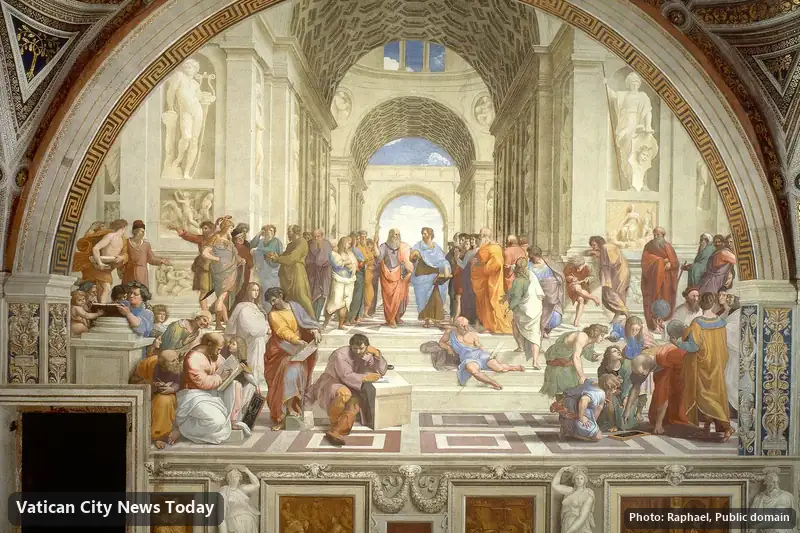
What Should You Know Before You Go?
Before you go, know your entrance, your time slot and your dress plan. These three things cause most of the problems visitors report.
- Entrance: Meeting points differ by listing. Some send you to the Museums entrance on Viale Vaticano, while others use a partner office such as Via Germanico, 8 or Via Sebastiano Veniero 74. Read the voucher twice.
- Time slot: One listing asks you to arrive 15 minutes early and warns that latecomers may lose skip-the-line access.
- Students: The official site says reduced student tickets are for students up to and including 25 years old, with a document confirming enrollment for the current year. A reduced ticket bought without entitlement is cancelled and not refunded, according to the official student ticket page.
For the wider background on the city-state, see the Vatican overview and the About Vatican City hub.
Short on time? Rome: Vatican Museums, Sistine Chapel & Basilica Tour, from $71Book a slot →What Else Is Worth Seeing Inside the State?
Other sights inside the state go beyond the three headline stops. Wikipedia lists the Apostolic Palace, the Vatican Library and the Vatican Museums among its religious, historic and cultural sites. Most are not open as casual walk-in stops, so I treat them as background, not as items for your list.
The Museums themselves are the deepest part of any visit. The official site names the Pio Clementino Museum, the Chiaramonti Museum, the Gregorian Egyptian Museum, the Pinacoteca, Raphael’s Rooms, the Borgia Apartment and the Sistine Chapel, among many others. That list is why a single ticket can fill half a day, and why I suggest choosing a few rooms in advance instead of trying to see everything.
One listing mentions more than 20,000 works of art by painters such as Michelangelo and Raphael. Treat that as a sign of scale, not a checklist. A short, focused route beats a long, tiring one.
If a church building is your main interest, read my page on the new Vatican church as well. It looks at the same city-state from the point of view of its buildings.
Prefer a guide? Rome: Vatican Museums, Sistine Chapel and Basilica Access, from $68See tours →Practical Tips for a Smooth Day
Practical tips for a smooth day come down to small choices made before you arrive. These are the ones I would make first:
- Choose one anchor, such as the Museums and Sistine Chapel, and book that slot first.
- Read the meeting point on your voucher, because the Museums entrance and partner offices are different places.
- Keep your voucher on your phone and bring a paper copy, since one listing says both paper and mobile vouchers are accepted.
- Leave time for security at every entrance, including the Basilica.
- Remember that the Museums and the Sistine Chapel are shown as closed on Sundays, so plan your week around that.
Travelers in the listing data often say that clearer directions for the right queue and arrival time would help. That is exactly why I suggest reading the meeting instructions the night before. A five-minute check can save a missed slot.
Planning ahead? Vatican: Museums & Sistine Chapel Entrance Ticket, from $36Check availability →Plan Your New Vatican City Visit
Your new Vatican City visit is easiest to plan if you book the Museums and Sistine Chapel first, add the Basilica as a morning or late stop, and leave a buffer for security. Check the official site for closures the week you travel.
New Vatican City is small, but it is a full sovereign state with a 1929 origin, a papal government and a calendar of its own. If you want the simplest next step, book Vatican tickets once your dates are set. Read the inclusions on each listing, and keep your voucher and ID ready at the entrance.
Last, remember the starting point: the Wikipedia line says that Vatican City is “a landlocked sovereign city-state in Southern Europe.”
“Vatican City, officially the Vatican City State, is a landlocked sovereign city-state in Southern Europe.”
Most booked this week: Rome: Vatican Museums & Sistine Chapel Skip-The-Line Ticket, from $32See prices →Top-rated Vatican tickets and tours
Vatican: Museums & Sistine Chapel Entrance Ticket
Powered by GetYourGuide · affiliate link
Rome: Vatican Museums & Sistine Chapel Skip-The-Line Ticket
Powered by GetYourGuide · affiliate link
Vatican Museums & Sistine Chapel Skip-the-Line Entry Ticket
Powered by GetYourGuide · affiliate link
Frequently asked questions
Is Vatican City a country?
Yes. Vatican City, officially the Vatican City State, is a landlocked sovereign city-state in Southern Europe. It is an enclave inside Rome and was established as a modern sovereign state by the 1929 Lateran Treaty.
Who lives in Vatican City?
Wikidata lists a population of 949 for 2024. Residents include the pope and the people who serve the Holy See and the state, since Vatican City is the administrative center of the Catholic Church.
How big is Vatican City?
Wikidata gives the area as 0.44 square kilometers. It is the smallest country by area and the least populous.
Is the Sistine Chapel open on Sundays?
Map listings show the Sistine Chapel and the Vatican Museums closed on Sundays and open 8 am to 8 pm the other days. St. Peter's Basilica is listed as open daily from 7 am to 7:10 pm. Always check the official calendar for closures.
What currency does Vatican City use?
Vatican City uses the euro as its official currency and issues its own euro coins. Wikidata also lists Italian and Latin as official languages.
Keep planning your visit
More About Vatican City guides
Online Vatican Tickets is an independent visitor guide. Prices and hours change: check the official Vatican Museums website before you go. Tour links are GetYourGuide affiliate links.