In this guide ▾
Vatican City government works differently from any other state you will visit. The pope rules as an absolute monarch, a body of appointed officials handles the daily work, and a separate entity, the Holy See, speaks for the Church to the world. If you are planning a trip, this setup explains why the place has its own stamps, its own euro coins and its own rules at the gate.
I wrote this guide for travelers who want a clear picture before they arrive. I stick to what the official Vatican City State pages, Wikipedia and Wikidata say, and I leave out anything I can’t source. When you are ready to plan the visit itself, where to buy Vatican tickets? is the question to start with.
Vatican City Government at a Glance
Vatican City government rests on one person, the pope, who serves as both head of state and ruler. According to Wikipedia, the state is an absolute monarchy under a pope chosen by the College of Cardinals in conclaves. Wikidata currently names Leo XIV as head of state.
Below the pope, power is spread across a few offices. I find it easiest to picture the setup as three layers: the pope at the top, a Commission that writes the rules, and a Governorate that carries them out.
| Role | Who or what | What it does |
|---|---|---|
| Head of state | The pope (Leo XIV) | Holds supreme authority over the state |
| Head of government | President of the Governorate (Raffaella Petrini) | Runs daily administration |
| Legislative body | Pontifical Commission for Vatican City State | Acts as the state’s legislature, with authority delegated by the pope |
| Foreign relations | Secretariat of State | Handles diplomacy for the pope |
Sources for the table: Wikipedia, Wikidata and the Vatican City State page on diplomatic relations.
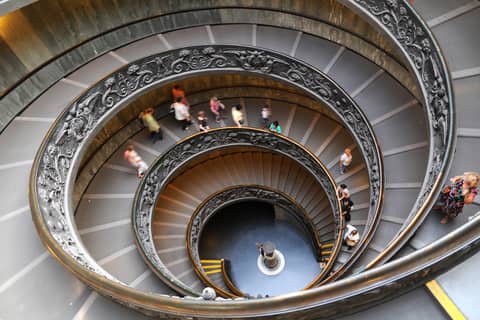 Want a closer look? Vatican: Museums & Sistine Chapel Entrance Ticket, from $36See times →
What Form of Government Does Vatican City Have?
Vatican City’s form of government is an absolute monarchy led by the pope. Nobody inherits the role. The College of Cardinals elects him in a conclave, so people also call the system an elective monarchy.
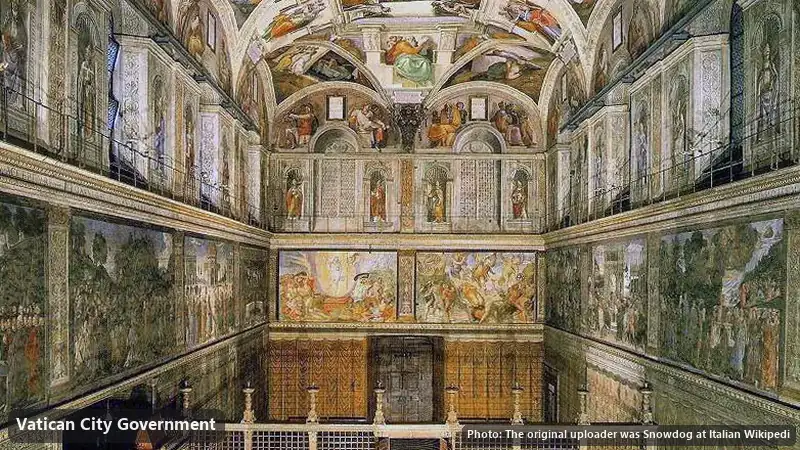 Book aheadVatican: Museums & Sistine Chapel Entrance TicketCheck availability · from $36
That makes the state unusual. Most monarchies pass the crown through a family, and most modern states split power between independent branches. Here, the pope delegates authority to others, but the authority starts with him.
I would not call it a democracy in any sense that a visitor would notice. You will not see election posters, campaign rallies or party offices. Decisions come from the pope and the bodies he appoints.
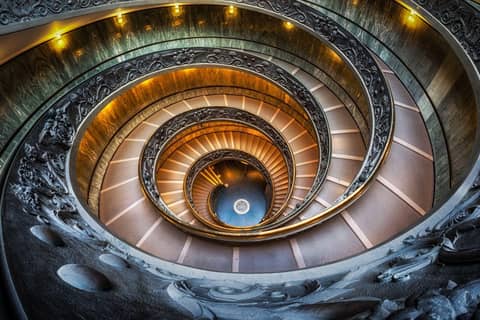 Skip the ticket line: Vatican Museums, Sistine Chapel & St. Peter's Basilica Tour, from $60Check dates →
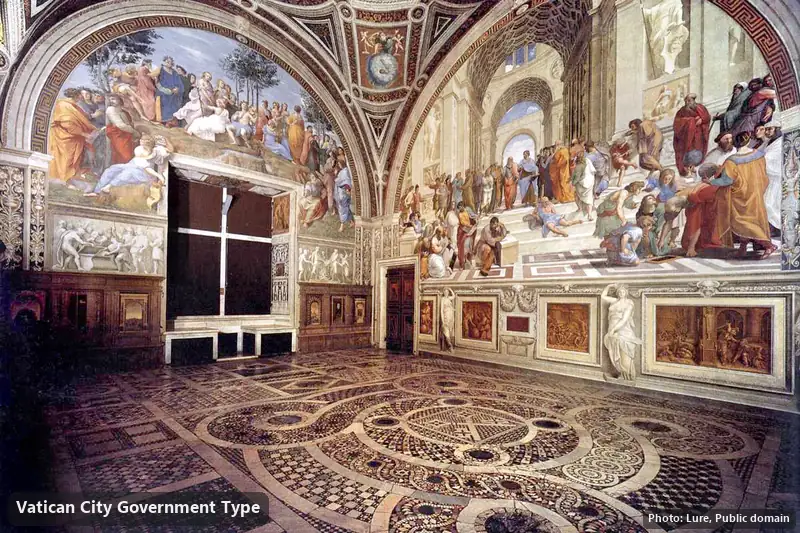
Who Runs the Vatican City Government?
The Vatican City government is led by the pope, while the President of the Governorate manages it day to day. Wikidata names Raffaella Petrini as head of government. The Governorate takes care of the practical needs of any city, such as services, supplies and connections.
The Fundamental Law of 13 May 2023 explains one reason this matters. Because the state is an enclave inside Rome, the Governorate maintains relations and signs the documents needed to ensure supplies, connections, facilities and public services. In plain terms, someone has to make sure the water, power and deliveries keep flowing, and that is the Governorate’s job.
Pope, Governorate and Holy See: Who Does What?
Pope, Governorate and Holy See are three names people mix up constantly, so here is how I keep them apart:
- The pope is the head of state and the ruler of Vatican City.
- The Governorate is the administration that handles daily life inside the state.
- The Holy See is the central authority of the Church worldwide and a sovereign entity under international law.
If you want the full picture of the Holy See itself, my page on the Holy See covers it. For how the pope fits into the visitor experience, see the pope and the Vatican.
 Short on time? Rome: Vatican Museums, Sistine Chapel & Basilica Tour, from $71Book a slot →
Vatican City State vs. the Holy See
Vatican City State is the territory, while the Holy See is the Church’s central authority. Wikipedia notes that the Holy See governs Vatican City, the episcopal see of the Diocese of Rome and central authority of the church worldwide, which is itself a sovereign entity under international law.
This split matters most in foreign affairs. The Vatican City State website says that the representation of the state, its diplomatic relations and treaties are reserved for the Roman Pontiff, who exercises them through the Secretariat of State. In every other case, the President of the Governorate represents the state.
Wikipedia adds that, on behalf of Vatican City, the Holy See maintains diplomatic relations with 180 states and is an observer state of the United Nations. So when a news story mentions “the Vatican” signing an agreement, it is usually the Holy See acting, not the small city-state with the museums.
 Prefer a guide? Vatican Museums & Sistine Chapel Skip-the-Line Entry Ticket, from $53See tours →
Who Makes the Laws in Vatican City?
Laws in Vatican City come from the pope, who holds supreme authority and hands lawmaking to the Pontifical Commission for Vatican City State. Wikipedia describes that Commission as the state’s legislative body.
For daily life, the key legal text is the Fundamental Law. The version cited on the official site is dated 13 May 2023. It sets out how the state is represented abroad and what the Governorate may do. It is a short, practical framework, not a long political document with competing parties.
I have not found the full structure of the courts in the sources I rely on, so I won’t describe it here. If you need legal details, the Vatican City State website is the right place to read them directly.
 Planning ahead? Rome: Vatican Museums, Sistine Chapel and Basilica Access, from $68Check availability →
How Vatican City Became a State
Vatican City became a state in its modern form through the Lateran Treaty of 1929. Wikipedia says that treaty settled the Roman question and established the sovereign state, and Wikidata gives the inception date as 11 February 1929.
The story is older than that. Wikipedia explains that the Holy See first exercised temporal power over the Papal States, which formed on the Italian Peninsula with the donation of Frankish territory in 756. After Italian unification concluded with the capture of Rome in 1870, the pope declared himself a “prisoner in the Vatican.” The 1929 treaty ended that standoff.
“Vatican City, officially the Vatican City State, is a landlocked sovereign city-state in Southern Europe.”
The Vatican City State website goes much further back. It explains that in ancient times the name Vatican referred to a swampy area on the right bank of the Tiber, and that the earliest records of the word Vaticanum for the area that roughly matches today’s state date to the 2nd century A.D. Tradition says Nero’s circus on this ground was the place where Saint Peter was martyred in 64 A.D.
 Most booked this week: Rome: Vatican Museums & Sistine Chapel Skip-The-Line Ticket, from $32See prices →
Vatican City by the Numbers
Vatican City by the numbers shows why the government can stay so compact. Each figure below comes from Wikidata, and I explain what it means for your visit.
- Area: 0.44 km². You can cross the state on foot in minutes, which is why one administration can manage it all.
- Population: 949 in 2024. Very few people live here, so the government serves residents, workers and a huge flow of visitors.
- Inception: 11 February 1929. This is the date tied to the Lateran Treaty.
- Currency: the euro. You pay in the same money as in Rome. Wikipedia adds that the state issues its own euro coins.
- Official languages: Italian and Latin. Signs and official documents lean on these, though visitor services also work in English.
- Heritage status: World Heritage Site. The whole state carries this designation, per Wikidata.
Wikipedia gives a slightly different area figure of 0.49 square kilometers and a population of about 882, so treat small differences between sources as normal. Either way, it is the smallest country by area and the least populous.
Best value pick: Vatican: Museums & Sistine Chapel Entrance Ticket, from $36View dates →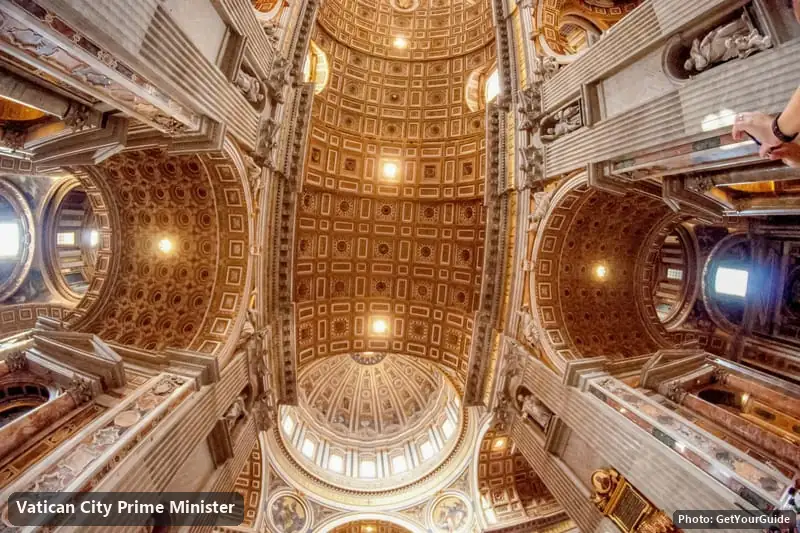
Do Regular Citizens Live in Vatican City?
Regular citizens living in Vatican City do exist, but only a small number. Wikidata lists a population of 949 for 2024, tiny next to the crowds who pass through daily.
Most people you see inside the walls are not residents. They are pilgrims, tourists and workers. The state is an enclave within Rome, which is why the Governorate must arrange supplies and services with the outside city, as the Fundamental Law states.
Wikipedia also notes that Vatican City is a de facto member of the Schengen Area, so the practical experience of reaching it is the same as walking into any other part of Rome. I cover the walk-in details in my guide to how to visit Vatican City.
Going with family? Vatican Museums, Sistine Chapel & St. Peter's Basilica Tour, from $60Compare tickets →Is Vatican City Really a Country?
Vatican City is a country in practice, specifically a sovereign city-state. Wikipedia’s entry begins by calling it a landlocked sovereign city-state in Southern Europe, and the official site says the state and the Holy See each have full recognition of their distinct international personalities.
The state has its own flag and its own anthem. The official anthem, according to the Vatican City State website, is the Pontifical March composed by Charles Gounod, which Pius XII ordered on 16 October 1949. It also has its own country calling code, +379, and its own internet domain, .va, according to Wikidata.
If you plan to write to or call an office there, my page on how to contact the Vatican lists the right starting points.
Want a closer look? Rome: Vatican Museums, Sistine Chapel & Basilica Tour, from $71See times →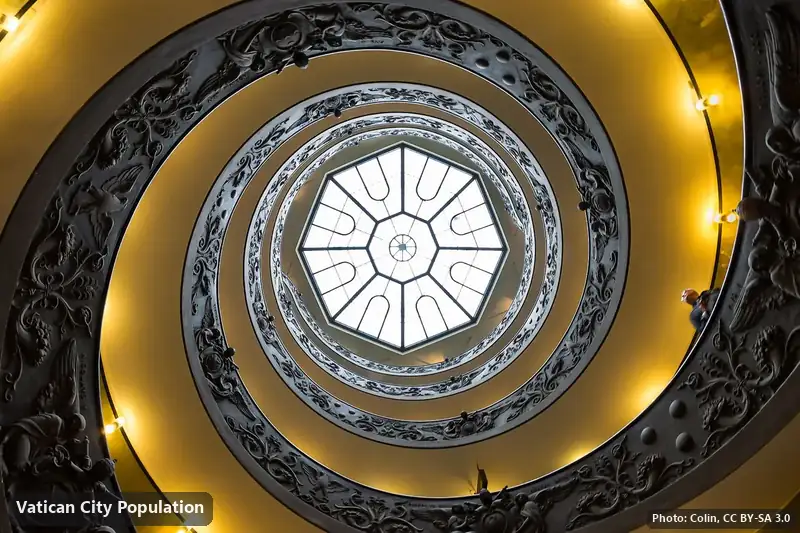
What the Vatican City Government Means for Your Visit
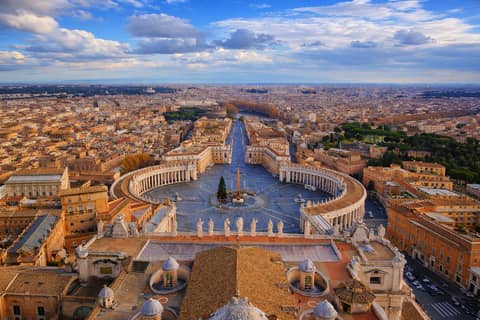
The Vatican City government shapes your visit mostly by running its own sites. The Vatican Museums, the Sistine Chapel and St. Peter’s Basilica sit inside the state’s territory, so their rules and schedules are set by Vatican authorities, not by the city of Rome.
That has a few practical effects:
- Opening times follow the Vatican’s calendar. Maps data shows the Vatican Museums and Sistine Chapel open 8 am to 8 pm Monday to Saturday and closed on Sunday, while St. Peter’s Basilica lists 7 am to 7:10 pm every day. Confirm everything on the official Vatican Museums site before you go, because hours change.
- Security is part of every entry. Every ticket route in the tour data mentions a security check at the entrance.
- Entry rules are the Vatican’s. For the museums, the entrance is on Viale Vaticano, according to the tour meeting-point data.
Vatican Museums
Art museum · ★ 4.6 · 213,480 Google reviews
00120 Città del Vaticano, Vatican City
Opening hours
- Friday8 am–8 pm
- Monday8 am–8 pm
- Saturday8 am–8 pm
- SundayClosed
- Thursday8 am–8 pm
- Tuesday8 am–8 pm
- Wednesday8 am–8 pm
Saint Peter’s Basilica
Basilica · ★ 4.8 · 185,703 Google reviews
Piazza San Pietro, 00120 Città del Vaticano, Vatican City
Opening hours
- Friday7 am–7:10 pm
- Monday7 am–7:10 pm
- Saturday7 am–7:10 pm
- Sunday7 am–7:10 pm
- Thursday7 am–7:10 pm
- Tuesday7 am–7:10 pm
- Wednesday7 am–7:10 pm
Sistine Chapel
Catholic church · ★ 4.7 · 98,723 Google reviews
00120 Città del Vaticano, Vatican City
Opening hours
- Friday8 am–8 pm
- Monday8 am–8 pm
- Saturday8 am–8 pm
- SundayClosed
- Thursday8 am–8 pm
- Tuesday8 am–8 pm
- Wednesday8 am–8 pm
One more honest note: the Basilica is free to enter, but access is not guaranteed and can vary because of crowd control, as one tour listing points out. The Museums are where a ticket decision really matters.
Skip the ticket line: Vatican Museums & Sistine Chapel Skip-the-Line Entry Ticket, from $53Check dates →Booking a Visit to the Vatican
Booking a Vatican visit is easiest if you reserve a timed slot for the Museums and Sistine Chapel before you travel. If you want a simple way to compare entry options side by side, see every ticket type side by side and pick what fits your day. I am an independent guide and not the official ticket office, so check prices on the official site as well.
The tours below are the ones I would look at first. The first is entry only, so you explore on your own, and the other two add a guide:
Vatican: Museums & Sistine Chapel Entrance Ticket
Powered by GetYourGuide · affiliate link
Vatican Museums, Sistine Chapel & St. Peter's Basilica Tour
Powered by GetYourGuide · affiliate link
Rome: Vatican Museums, Sistine Chapel & Basilica Tour
Powered by GetYourGuide · affiliate link
Here is how they compare in the data I have:
- The entrance ticket (listing 62214) is priced at $36.21 and includes skip-the-ticket-line entry, with an audio guide if you select that option.
- The Enjoy Rome walking tour (listing 1103) is priced at $60.17 and lasts 2 to 3 hours with fast-track access.
- The Crown Tours option (listing 429439) is priced at $71.31, includes a licensed guide and lists St. Peter’s Basilica and Dome access as selectable options.
Prices can change, so confirm the current price on the booking page.
What Travelers Say About Entry
“We were unable to do this with a guide due to my child being in a wheelchair. We did the tour on our own with an audio guide. The Vatican was beautiful and we did get to see most of the sights”
Traveler reviews of entry on these listings praise timed entry and knowledgeable guides. A few travelers say clearer directions to the correct queue would help, so I suggest reading the meeting-point notes carefully and arriving on time, as the listings ask.
Short on time? Rome: Vatican Museums, Sistine Chapel and Basilica Access, from $68Book a slot →Common Questions About Vatican Leadership
Questions about Vatican leadership often start with the Vatican City government and drift to topics like a prime minister or a police force. I can only cover what my sources show.
There is no prime minister in the sense that Italy has one. The closest role is the President of the Governorate, who acts as head of government. There is also no king by title. The pope is the monarch, and he is elected, not inherited.
For the police question, I did not find official detail in my sources, so I won’t guess. The official Vatican City State website is the right place to read about public safety and services.
As for the pope’s pay, I don’t have a sourced figure, and I would not trust a number quoted without a link to an official document.
Prefer a guide? Rome: Vatican Museums & Sistine Chapel Skip-The-Line Ticket, from $32See tours →Planning Your Trip Around the Vatican City Government
Planning a trip around the Vatican City government comes down to a simple takeaway. The pope sits at the top, the Governorate runs the daily work, the Pontifical Commission acts as the legislature, and the Holy See speaks for the Church abroad. That structure is why Vatican City sets its own hours, rules and security at the gate.
My checklist before you go:
- Check opening times on the official Vatican Museums website, since Sundays are listed as closed.
- Book a timed slot for the Museums and Sistine Chapel before you travel. You can book Vatican tickets online from the options above.
- Read the meeting-point notes on your booking so you arrive at the correct entrance on time.
- Dress and plan for security screening at every major site.
- Use the About Vatican City hub and my main Vatican guide for the next question on your list.
If you remember one thing about the Vatican City government, make it this: the state is tiny, but it has a full set of institutions, and they set the rules for everything you will see inside the walls.
Planning ahead? Vatican: Museums & Sistine Chapel Entrance Ticket, from $36Check availability →Top-rated Vatican tickets and tours
Vatican: Museums & Sistine Chapel Entrance Ticket
Powered by GetYourGuide · affiliate link
Vatican Museums, Sistine Chapel & St. Peter's Basilica Tour
Powered by GetYourGuide · affiliate link
Rome: Vatican Museums, Sistine Chapel & Basilica Tour
Powered by GetYourGuide · affiliate link
Frequently asked questions
Does the pope make $32,000 a month?
I can't confirm any salary figure from the official sources I rely on, so I won't repeat one. The Vatican City State website describes the pope's role as head of state, not as a salaried job, and the official pages are the place to check any claim about pay.
Who runs the Vatican government day to day?
The President of the Governorate, currently Raffaella Petrini according to Wikidata, acts as head of government. The Governorate handles the state's practical needs, including supplies, connections and public services, as the Fundamental Law describes.
Do regular citizens live in Vatican City?
Yes, but very few people do. Wikidata lists a population of 949 for 2024, in an area of about 0.44 square kilometers. Most visitors you meet inside the walls are tourists, pilgrims and workers.
Does Vatican City have a president or a king?
It has neither a king nor an elected president as head of state. The head of state is the pope, and the title of President belongs to the head of the Governorate, which runs the state's daily affairs.
Who makes the laws in Vatican City?
The pope holds the supreme power, and he delegates lawmaking to the Pontifical Commission for Vatican City State. Wikipedia describes that Commission as the state's legislative body.
Keep planning your visit
More About Vatican City guides
Online Vatican Tickets is an independent visitor guide. Prices and hours change: check the official Vatican Museums website before you go. Tour links are GetYourGuide affiliate links.