In this guide ▾
What happens at the Vatican is more than sightseeing. It is a working state where the pope governs, priests celebrate Mass, cardinals meet to elect new popes, and millions of people walk through some of the greatest art collections on earth. I will take you through each part in the order a visitor tends to ask about it, then show you how to see it for yourself.
My short answer: the Vatican runs on three tracks at once. There is government, there is worship, and there is public culture. Once you can tell them apart, a visit makes much more sense.
What Happens at the Vatican Every Day?
What happens at the Vatican every day comes down to three activities running side by side: the state carries out its administrative work, the Basilica holds services, and the museums welcome the public. The visitor sees the second and third. The first happens mostly behind closed doors.
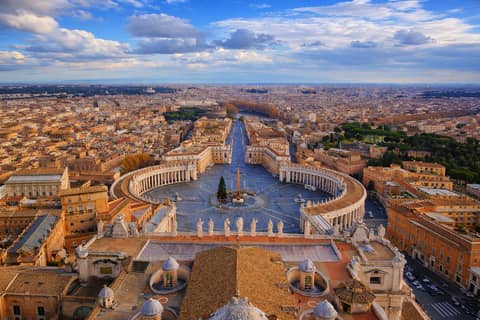
Vatican City is a landlocked city-state inside Rome, ruled by the pope, according to Wikipedia’s entry on Vatican City. It has its own currency, the euro, and its own coins. It is also a de facto member of the Schengen Area, so you do not go through a separate border check like you would at a country with a closed frontier.
“Vatican City, officially the Vatican City State, is a landlocked sovereign city-state in Southern Europe.”
For visitors, the day starts early. St. Peter’s Basilica lists hours of 7 am to 7:10 pm every day of the week. The Vatican Museums keep different hours: 8 am to 8 pm Monday to Saturday and closed on Sunday, per the museum listing. Hours change, so confirm them on the official Vatican Museums site before you go.
| Place | What happens there | Typical hours |
|---|---|---|
| St. Peter’s Basilica | Holy Mass, prayer, sightseeing, dome climb | 7 am to 7:10 pm daily |
| Vatican Museums | Art and sculpture collections open to visitors | 8 am to 8 pm, Monday to Saturday |
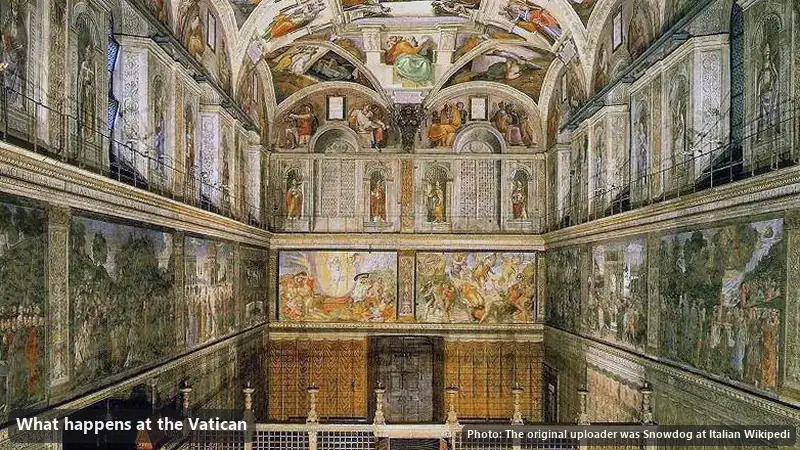
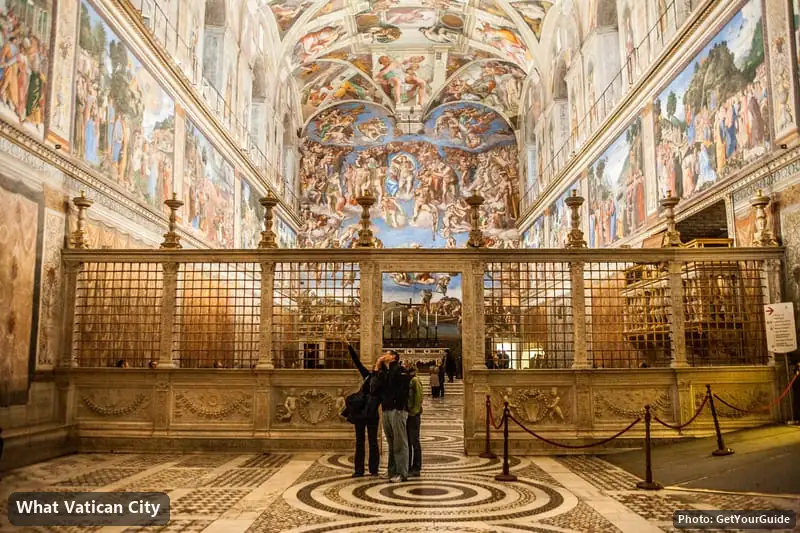
| Sistine Chapel | Michelangelo’s ceiling; site of papal elections | Same as the museums, entered through them |
| Apostolic Palace and offices | Church administration, closed to the public | Not open for visits |
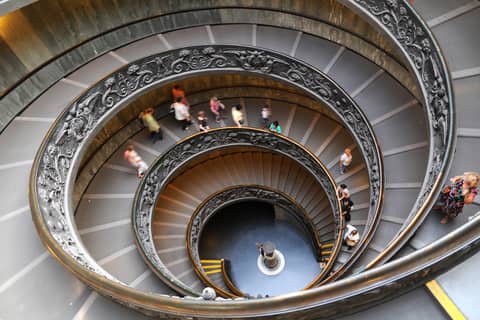 Want a closer look? Vatican: Museums & Sistine Chapel Entrance Ticket, from $36See times →
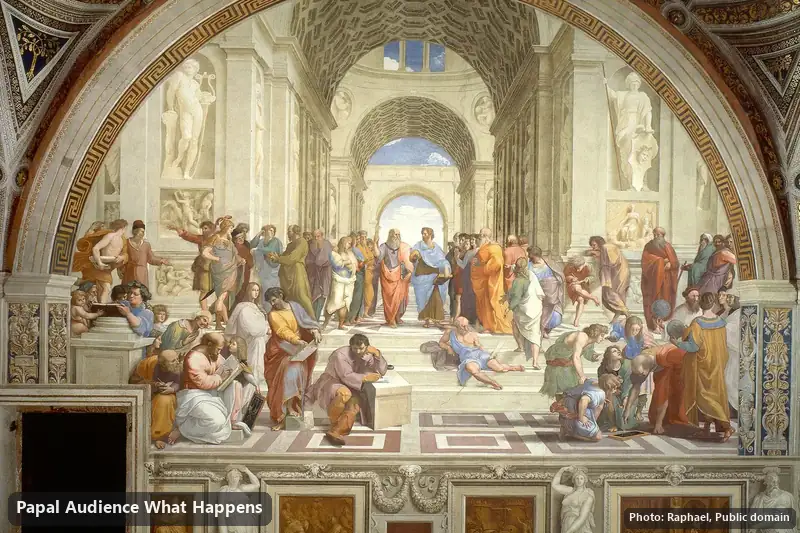
Who Runs Vatican City and What Does the Pope Do There?
The pope runs Vatican City as an absolute monarch, having been chosen by the College of Cardinals in a conclave. He delegates authority to the Pontifical Commission for Vatican City State, which acts as the legislative body, as Wikipedia explains. Wikidata lists Leo XIV as head of state and Raffaella Petrini as head of government.
 Book aheadVatican: Museums & Sistine Chapel Entrance TicketCheck availability · from $36
The pope also leads the Holy See. That is the Church’s central authority, the episcopal see of the Diocese of Rome, and a sovereign entity under international law. In plain terms, the Vatican is the state and the Holy See is the Church government that sits inside it. On behalf of Vatican City, the Holy See keeps diplomatic relations with 180 states and holds observer status at the United Nations.
If you are mixing up the terms, my guide to what the Vatican is sorts out the vocabulary. And if you wonder how a country fits inside a city, Vatican City sits inside Rome, surrounded by Italian territory.
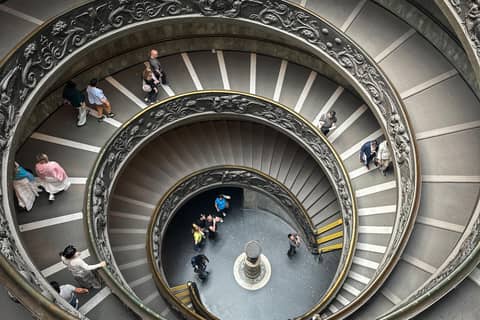 Skip the ticket line: Vatican Museums & Sistine Chapel Skip-the-Line Entry Ticket, from $53Check dates →
What Happens in St. Peter’s Basilica?
St. Peter’s Basilica hosts Holy Mass at the Altar of the Chair on a published daily schedule, while visitors can walk the nave, admire the artwork and climb the dome. The Basilica posts its Mass times on the official Holy Mass page, so check it for the date you plan to visit.
The Basilica is also where the Church gathers for its biggest moments. After the death of Pope Francis, the same official page says the Basilica opened on April 23, 2025 for the faithful to pay their respects, and his funeral took place in St. Peter’s Square on April 26 at 10:00 AM. That is a reminder that this is a living church, not just a monument.
“Do not miss this place for a FREE location! This is the most beautiful church I've ever been to. Once your through security and the main doors, you are truly hit by the size and artwork. We got there 645am and already there's a line but got in very quickly. If your just there for free visit, you can see most of it in 40mins. Pay extra for the other locations.”
As a visitor, you should know that security checks come first. They happen in St. Peter’s Square, and the Basilica’s dome FAQ says they remain mandatory for all visitors. Clothing for a place of worship is required, with shoulders and knees covered.
What happens if you climb the dome?
The dome climb lasts about one hour on average, according to the official dome FAQ. The lift goes only as far as the terrace level, and from the inner ring you climb 320 steps to reach the outer ring.
A dome ticket bought online also includes entry to the Basilica, to be used 90 minutes before your dome time, plus the digital audio guide. After booking, watch your email for the QR codes. They are mandatory at the entrance, and the FAQ says to write to the Basilica’s booking address if they do not arrive within 30 minutes. Only small personal bags are allowed, and there is no cloakroom.
 Short on time? Rome: Vatican Museums, Sistine Chapel & Basilica Tour, from $71Book a slot →
What Happens at the Vatican Museums and the Sistine Chapel?
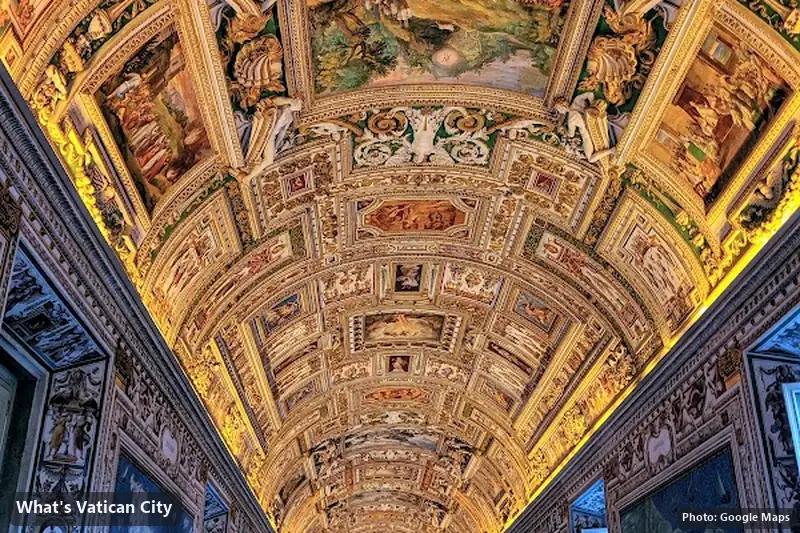
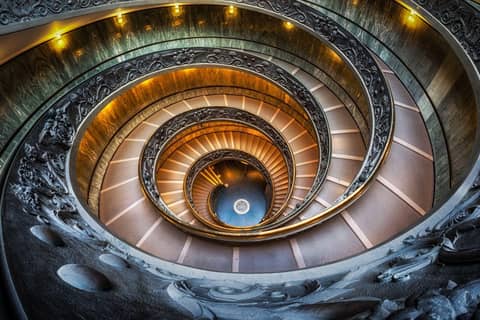
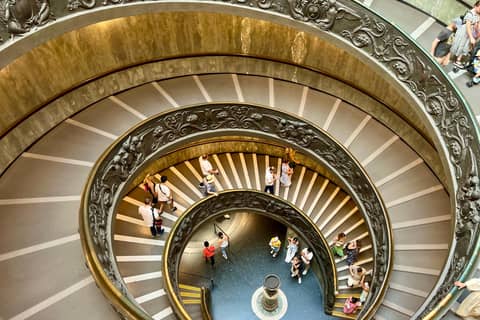
The Vatican Museums and the Sistine Chapel form one long route past Renaissance art, classical sculpture and papal collections, finishing in the Sistine Chapel. One tour listing describes more than 20,000 works by painters such as Michelangelo and Raphael. The chapel’s centerpiece is Michelangelo’s fresco The Creation of Adam, which the listings highlight.
The key thing to understand is that the Museums are timed. Reviewers of the entry ticket say timed entry makes access easier, and the ticket is valid only for the reserved slot. One traveler with a wheelchair user in the family skipped the guided option and used an audio guide instead, and still saw most of the sights.
My guide to what the Vatican Museums are explains the galleries one by one, so you can pick the rooms that matter to you. The Museums exit leads you toward the Sistine Chapel, so plan your time before you go in, not after.
“We were unable to do this with a guide due to my child being in a wheelchair. We did the tour on our own with an audio guide. The Vatican was beautiful and we did get to see most of the sights”
How do you get into the Museums without a long wait?
Getting into the Museums without a long wait starts with a timed ticket booked before you travel, then heading to the entrance on Viale Vaticano, because walk-up lines can be slow. One reviewer who tried to buy tickets on the spot said they waited 30 to 40 minutes and then had to rush through the galleries before closing.
I’d choose a morning slot if you want room to breathe. A morning slot also leaves your afternoon free for the Basilica. Prices and availability change, so look at the tours below and confirm the current price before you book.
Vatican: Museums & Sistine Chapel Entrance Ticket
Powered by GetYourGuide · affiliate link
Vatican Museums & Sistine Chapel Skip-the-Line Entry Ticket
Powered by GetYourGuide · affiliate link
If you like the idea of timed entry but want help finding the right door, take a look at Vatican tickets online and compare the options side by side. Each listing shows what is included, so you do not end up at the wrong entrance.
 Prefer a guide? Vatican Museums, Sistine Chapel & St. Peter's Basilica Tour, from $60See tours →
What Happens When a New Pope Is Elected?
A new pope is elected at a conclave, which the cardinals convene when a pope dies or resigns, and the vote takes place in the Sistine Chapel. Wikipedia confirms that the pope is elected by the College of Cardinals through conclaves, which is why the chapel closes to visitors during that process.
For a traveler, the practical point is that the Sistine Chapel is two things at once. Most days it is the final room of a museum visit. On the rare days of a conclave, it is a working electoral hall. Check the official site before traveling if a papal transition is in the news, because access can change quickly.
I also get asked whether a visit is still worth it in a year with big events. Yes, but plan earlier. Crowd control can affect St. Peter’s Basilica, and one ticket listing warns that Basilica access is free but not guaranteed when crowds are heavy.
 Planning ahead? Rome: Vatican Museums, Sistine Chapel and Basilica Access, from $68Check availability →
What Is Under the Vatican and Behind the Walls?
What is under the Vatican is a layer of history beneath St. Peter’s that most day visitors never see, and my page on what is under the Vatican covers it in detail. The Vatican Necropolis and the grottoes are the sites people ask about most.
Above ground, the Vatican also includes the Apostolic Palace, the Vatican Library and the gardens. Wikipedia lists the Apostolic Palace and the Library among the city’s major sites, along with the Basilica, the Chapel and the Museums. Most of these are not open to casual walk-ins, so I would treat them as extras to research, not as the core of a first trip.
For the bigger picture, my Vatican overview ties the whole place together, and the About Vatican City hub collects every guide on how the state works.
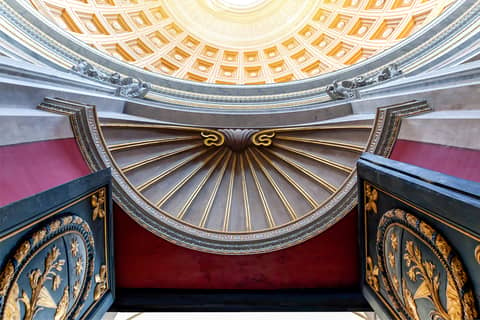 Most booked this week: Rome: Vatican Museums & Sistine Chapel Skip-The-Line Ticket, from $32See prices →
What Happens at the Vatican by the Numbers
What happens at the Vatican by the numbers is easier to grasp with a few key figures that show why the state works as it does. All of them come from Wikidata’s Vatican City record.
- Area: 0.44 km². You can cross the state on foot in minutes, so the crowds feel dense.
- Population: 949 in 2024. That is a small community with a huge daily visitor load.
- Founded: 1929-02-11, the date the modern state was established. Wikipedia ties this to the Lateran Treaty.
- Heritage status: World Heritage Site. The listing covers the religious and cultural landmarks you visit.
- Currency: euro. You pay in the same money as the rest of Italy.
- Official languages: Italian and Latin. Expect Italian on signs and Latin in formal documents.
Time matters for planning too. Wikidata gives the time zone as Central European Time, and my short guide to the time in Vatican City covers the clock if you are coordinating with a group.
Best value pick: Vatican: Museums & Sistine Chapel Entrance Ticket, from $36View dates →Everything That Goes On Inside the Vatican, Explained
Everything that goes on inside the Vatican fits a simple three-track model of my own. The first track is government: the pope, the Holy See and the Pontifical Commission. The second is worship: Masses, funerals and elections. The third is culture: museums, art and the Basilica as a sight.
Visitors usually touch only the third track, with a glimpse of the second. That is fine. You do not need to follow Church politics to enjoy the Sistine Chapel, but knowing who runs the place changes how you read what you see.
Vatican Museums
Art museum · ★ 4.6 · 213,480 Google reviews
00120 Città del Vaticano, Vatican City
Opening hours
- Friday8 am–8 pm
- Monday8 am–8 pm
- Saturday8 am–8 pm
- SundayClosed
- Thursday8 am–8 pm
- Tuesday8 am–8 pm
- Wednesday8 am–8 pm
Saint Peter’s Basilica
Basilica · ★ 4.8 · 185,703 Google reviews
Piazza San Pietro, 00120 Città del Vaticano, Vatican City
Opening hours
- Friday7 am–7:10 pm
- Monday7 am–7:10 pm
- Saturday7 am–7:10 pm
- Sunday7 am–7:10 pm
- Thursday7 am–7:10 pm
- Tuesday7 am–7:10 pm
- Wednesday7 am–7:10 pm
Sistine Chapel
Catholic church · ★ 4.7 · 98,723 Google reviews
00120 Città del Vaticano, Vatican City
Opening hours
- Friday8 am–8 pm
- Monday8 am–8 pm
- Saturday8 am–8 pm
- SundayClosed
- Thursday8 am–8 pm
- Tuesday8 am–8 pm
- Wednesday8 am–8 pm
Going with family? Vatican Museums & Sistine Chapel Skip-the-Line Entry Ticket, from $53Compare tickets →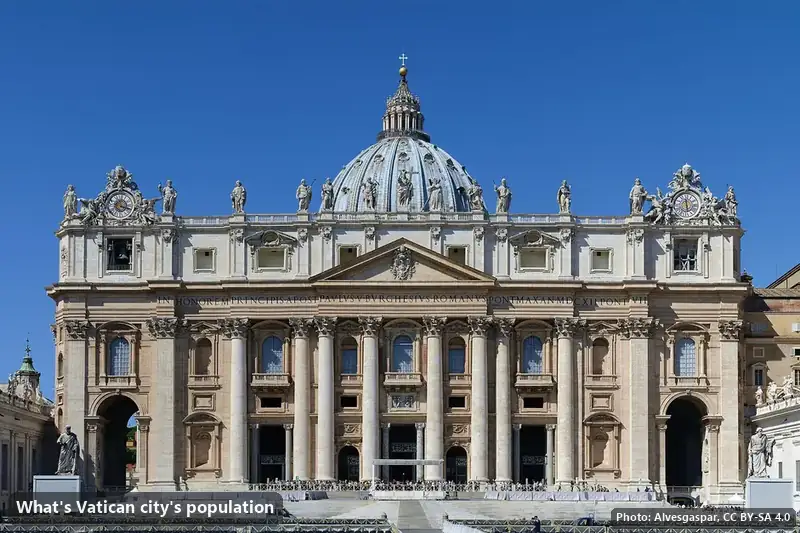
What Can You Do at the Vatican in One Day?
One day at the Vatican is enough for the Basilica in the morning and the Museums with the Sistine Chapel in the afternoon. That order works because the Basilica opens at 7 am and a morning visit meets the shortest security lines. I’d save the Museums for a booked slot.
Here is the plan I would follow:
- 7 am to 8:30 am: Pass security in St. Peter’s Square and enter the Basilica. One reviewer arrived at 6:45 am, found a line already, and still got in quickly.
- 9 am to 10 am: Climb the dome if you want the view, and allow about an hour.
- Midday: Eat outside the walls. The listed pizzeria Ristorante Pizzeria Castello on Via delle Fornaci is open 11 am to 11 pm.
- Afternoon: Enter the Museums at your booked time and finish in the Sistine Chapel.
Not sure which ticket suits this plan? My guide to which tickets to get for Vatican City breaks down the choices by travel style.
Want a closer look? Rome: Vatican Museums, Sistine Chapel & Basilica Tour, from $71See times →How to Book Your Visit
Booking your visit works best when you choose the ticket by what you want to see, not by the lowest price. The self-guided entry ticket suits people who like their own pace. A guided tour suits those who want the history explained, including the Basilica.
- Entry ticket only: The entry listing is about $36 and has a very large review base of more than 160,000 reviews at a 4.48 rating. It excludes a guide and the dome.
- Entry with a host: The Inside Out Italy listing is about $53, with a host who helps you through check-in but not a guide.
- Guided tour with dome option: The Crown Tours listing is about $71 and includes a licensed guide, with dome access on select options.
Prices come from the listings and can move, so confirm before paying. I’d book the guided option if you want the story behind the art, and the entry ticket if you would rather wander. Just remember that we are an independent guide, not the official ticket office. For the official side, the Vatican Museums site is the source of truth.
Rome: Vatican Museums, Sistine Chapel & Basilica Tour
Powered by GetYourGuide · affiliate link
Vatican Museums & Sistine Chapel Skip-the-Line Entry Ticket
Powered by GetYourGuide · affiliate link
For a side-by-side look at every option, compare Vatican tickets in one place and pick the one that fits your day.
Skip the ticket line: Vatican Museums, Sistine Chapel & St. Peter's Basilica Tour, from $60Check dates →Final Practical Notes on What Happens at the Vatican
What happens at the Vatican is best planned around the three tracks. Expect worship and security in the Basilica, timed art in the Museums, and a government you will mostly never see. Dress with shoulders and knees covered, bring a small bag, and keep your QR codes ready.
If you only remember one thing about what happens at the Vatican, make it this: book the Museums ahead, arrive early at the Basilica, and check the official sites for closures. Do that and the rest of the day tends to fall into place.
Short on time? Rome: Vatican Museums, Sistine Chapel and Basilica Access, from $68Book a slot →Top-rated Vatican tickets and tours
Vatican: Museums & Sistine Chapel Entrance Ticket
Powered by GetYourGuide · affiliate link
Vatican Museums & Sistine Chapel Skip-the-Line Entry Ticket
Powered by GetYourGuide · affiliate link
Rome: Vatican Museums, Sistine Chapel & Basilica Tour
Powered by GetYourGuide · affiliate link
Frequently asked questions
What is special about the Vatican City?
Vatican City is both the smallest country by area and the least populous, and it is an absolute monarchy under the pope. It is also a World Heritage Site that holds St. Peter's Basilica, the Sistine Chapel and the Vatican Museums.
What to do in Vatican City for free?
St. Peter's Basilica is the best free stop, since the Basilica ticket itself costs nothing, though security lines and crowd control can limit access. One traveler said you can see most of it in about 40 minutes if you skip the paid extras.
What to do in Vatican City for a day?
Start at St. Peter's Basilica when it opens at 7 am, then book a timed entry to the Vatican Museums and Sistine Chapel for the afternoon. If you want views, add the dome climb, which takes about an hour.
Why is it called the Holy See?
The Holy See is the central authority of the Catholic Church and the episcopal see of the Diocese of Rome. It governs Vatican City and is a sovereign entity under international law.
What language is spoken in Vatican City?
Wikidata lists Italian and Latin as the official languages of Vatican City. Latin is also used in official documents of the Holy See.
Keep planning your visit
More About Vatican City guides
Online Vatican Tickets is an independent visitor guide. Prices and hours change: check the official Vatican Museums website before you go. Tour links are GetYourGuide affiliate links.