In this guide ▾
Swiss Guard Vatican tickets are a common search, but there is no such ticket. The Swiss Guard is a military corps that protects the pope, so you cannot buy a pass to it. You meet the guards on the way into Vatican City, and the only paid entry you are likely to need is a Vatican Museums ticket.
I’ll explain who the guards are, where you can see them, and which ticket to book so your visit has no surprises. If you want a clean answer on where to buy Vatican tickets?, start with the booking section below.
Are there Swiss Guard Vatican tickets you can buy?
Swiss Guard Vatican tickets cannot be bought, because the official Vatican profile describes the Pontifical Swiss Guard as a military body of Swiss citizens whose main task is to watch over the safety of the pope and his residence. It is a working unit, not a museum exhibit.
That is why any listing selling “Swiss Guard Vatican tickets” deserves caution. I would not pay a third party for access to the guards, because their duties are public-facing only by accident. Seeing them costs nothing beyond getting to Vatican City.
What people usually want is one of three things:
- A photo with a guard in the Renaissance uniform.
- A ticket to the Vatican Museums and Sistine Chapel.
- A guided tour that explains the guard’s history.
The first is free, the second is a normal entry ticket, and the third is a guided museum tour. I cover each below.
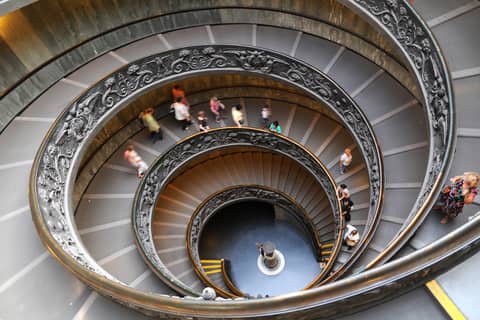 Want a closer look? Vatican: Museums & Sistine Chapel Entrance Ticket, from $36See times →
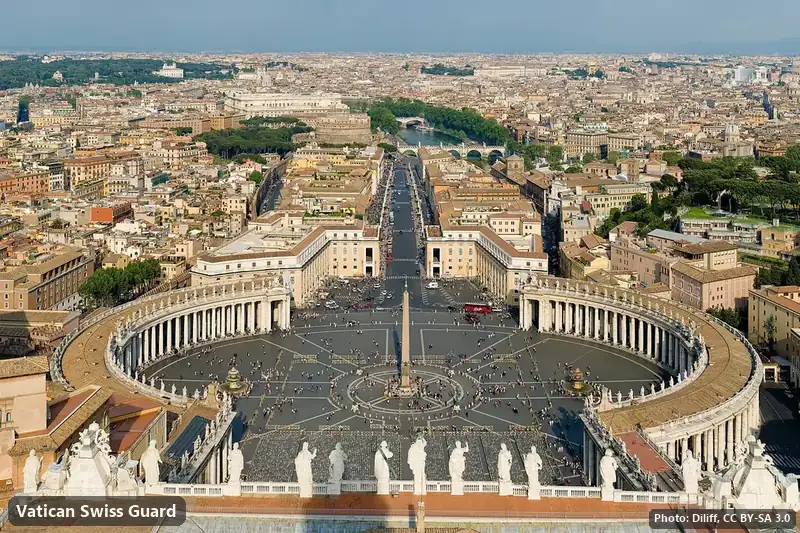
Where can you see the Swiss Guard at the Vatican?
The Swiss Guard at the Vatican is visible at the entrances to Vatican City State. Guarding the accesses is one of the corps’ listed duties in the official profile, and the Vatican’s own text adds that pilgrims love to have their photo taken with the guards there.
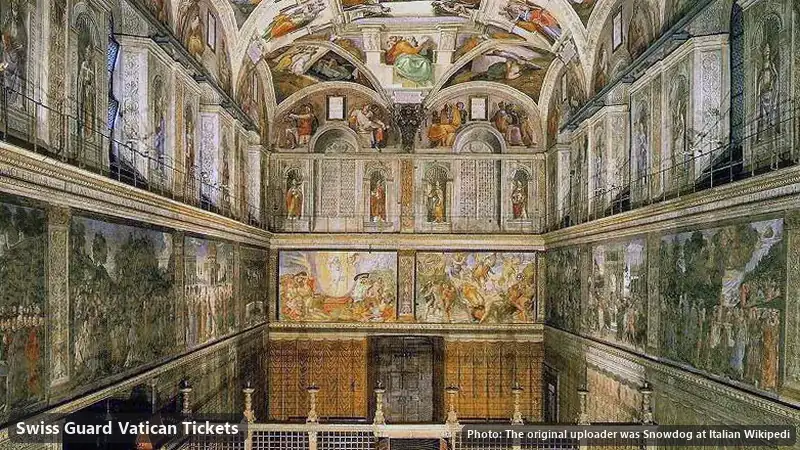 Book aheadVatican: Museums & Sistine Chapel Entrance TicketCheck availability · from $36
The guard also serves in the Papal Chapels and at other ceremonies and audiences, taking orders from the Prefect of the Papal Household. Those events follow the papal calendar, so check the official Vatican site for what is scheduled rather than planning your day around a guess.
Here is how I would handle it on a visit:
- Walk to the guard posts at an entrance and look from a respectful distance.
- Ask politely before you pose beside a guard. They are on duty.
- Do not touch the uniform or the halberd.
The places below are the usual starting points for a Vatican day, and the map block shows how they sit relative to each other.
Vatican Museums
Art museum · ★ 4.6 · 213,480 Google reviews
00120 Città del Vaticano, Vatican City
Opening hours
- Friday8 am–8 pm
- Monday8 am–8 pm
- Saturday8 am–8 pm
- SundayClosed
- Thursday8 am–8 pm
- Tuesday8 am–8 pm
- Wednesday8 am–8 pm
Saint Peter’s Basilica
Basilica · ★ 4.8 · 185,703 Google reviews
Piazza San Pietro, 00120 Città del Vaticano, Vatican City
Opening hours
- Friday7 am–7:10 pm
- Monday7 am–7:10 pm
- Saturday7 am–7:10 pm
- Sunday7 am–7:10 pm
- Thursday7 am–7:10 pm
- Tuesday7 am–7:10 pm
- Wednesday7 am–7:10 pm
CASSA ONLINE E GRUPPI
Tourist attraction · ★ 4.4 · 179 Google reviews
00120 Città del Vaticano, Vatican City
Opening hours
- FridayOpen 24 hours
- MondayOpen 24 hours
- SaturdayOpen 24 hours
- SundayOpen 24 hours
- ThursdayOpen 24 hours
- TuesdayOpen 24 hours
- WednesdayOpen 24 hours
 Skip the ticket line: Rome: Vatican Museums & Sistine Chapel Skip-The-Line Ticket, from $32Check dates →
Who are the Swiss Guards and what is their job?
The Swiss Guards are the Pontifical Swiss Guard, the corps that protects the pope and the Apostolic Palace within Vatican City State, according to Wikipedia’s Swiss Guard article. Their remit extends to the pope’s apostolic travels, the papal palace at Castel Gandolfo, and the College of Cardinals when the papal throne is vacant.
The official profile adds two duties: accompanying the pope on journeys and performing “other services of order and honor.” The corps reports directly to the pope, who acts through the Cardinal Secretary of State.
One point surprises many visitors. The guards watch the pope and the gates, but the overall security and law enforcement of the city-state belongs to the separate Corps of Gendarmerie of Vatican City. If you need help in the square, that is the body to look for.
“The Pontifical Swiss Guard, also known as the Papal Swiss Guard or simply Swiss Guard, is an armed force, guard of honour, and protective security unit, maintained by the Holy See to protect the Pope and the Apostolic Palace within the territory of the Vatican City State.”
What the uniform is, and what the guards wear on duty
The Swiss Guard uniform in its dress version is Renaissance in style: a tunic striped in red, dark blue and yellow, a high plumed helmet and a halberd. Wikipedia notes that on duty the guardsmen usually wear functional attire and carry modern firearms.
Since the 1981 assassination attempt on John Paul II, the corps has put more weight on its non-ceremonial roles, including close protection and counterterrorism training. The costume is the part you photograph; the training is the part that matters.
 Short on time? Vatican Museums & Sistine Chapel Skip-the-Ticket-Line Tour, from $110Book a slot →
Swiss Guard facts and figures at a glance
Swiss Guard facts and figures are the numbers worth knowing before a visit, each with a note on what it means for you.
- 135 members in 2024, per Wikidata. The official structure page gives the same total, so the corps is small enough that you will see only a handful at any one time.
- Founded 22 January 1506, according to Wikidata. That makes it one of the oldest military units still in service.
- 85 halberdiers, the rank-and-file troop, listed on the official structure page. Most guards you photograph are halberdiers.
- 0.44 km² for Vatican City, per Wikidata. The whole state is small, so everything in this guide is within walking distance.
- 949 residents in 2024, from the same Wikidata entry. It is a tiny country with a very large visitor flow.
- World Heritage Site status for Vatican City, again on Wikidata. Expect bag checks and strict rules at the gates.
 Prefer a guide? Rome: Vatican Museums & Sistine Chapel Skip-the-Line Ticket, from $40See tours →
How did the Swiss Guard begin?
The Swiss Guard began under Pope Julius II, who founded it in 1506. The official profile says the Swiss were seen as invincible fighters of proverbial loyalty, and that in 1512 they received the title “defenders of the freedom of the Church.”
Wikipedia gives the earlier steps. Sixtus IV allied with the Swiss Confederacy and built barracks on Via Pellegrino, and Innocent VIII renewed the pact. When Cardinal Giuliano della Rovere became Julius II in 1503, he asked the Swiss Diet for a constant corps of 200 mercenaries, financed by the Fugger banking family of Augsburg. The first contingent of 150 soldiers set out on foot for Rome in September 1505.
I find this the most useful background if you plan a museum visit. Julius II is also the pope who commissioned work from Michelangelo and Raphael, so the guard and the art you queue for come from the same court.
 Planning ahead? Vatican Museums, Sistine Chapel & St. Peter's Basilica Tour, from $60Check availability →
What are the requirements to join the Swiss Guard?
The requirements to join the Swiss Guard are strict: a recruit must be an unmarried Swiss Catholic man aged 19 to 30, at least 174 cm (5 ft 8.5 in) tall. He also needs to have finished basic training with the Swiss Armed Forces and hold a professional diploma or high school degree, according to Wikipedia.
Those rules explain why you will not meet a guard from anywhere but Switzerland. The corps is led by a colonel; the official structure page names Colonel Christoph Graf as commander and Lieutenant Colonel Loïc Marc Rossier as vice commander. It also lists a chaplain, a major, two captains and three lieutenants.
The guard honors Saints Martin of Tours (11 November), Sebastian (20 January) and Nicholas of Flüe (25 September) as patrons. If you visit near one of those dates, the official Vatican site is the place to look for any related ceremony.
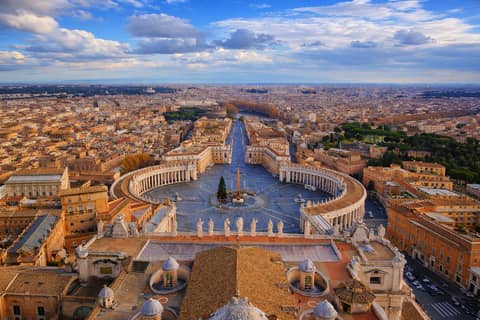 Most booked this week: Rome: Vatican Museums, Sistine Chapel & Basilica Tour, from $71See prices →
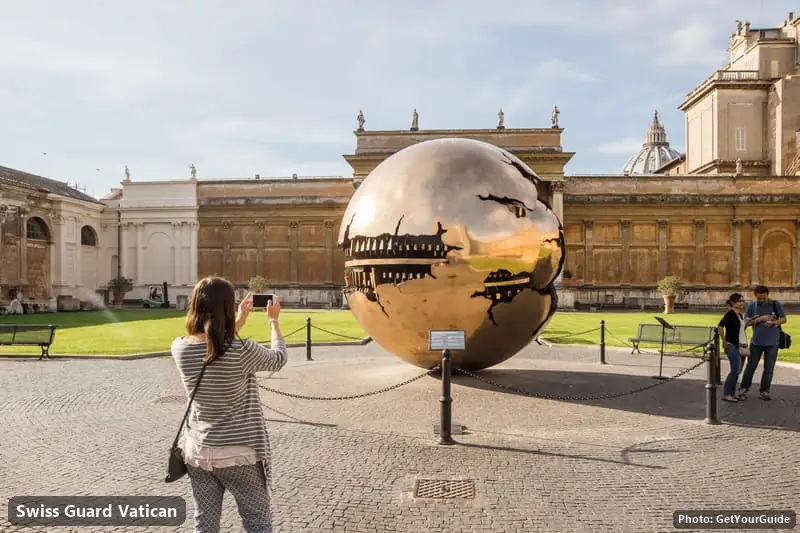
Which ticket do you need to visit the Vatican where the guards serve?
The ticket you need is one for the Vatican Museums and Sistine Chapel. Strolling through the square and past the guard’s entrances costs nothing, but the museums require a timed entry.
Tickets for Vatican City come in a few forms, and I break the main ones down in the table. The prices are the GetYourGuide listing prices in US dollars at the time of writing; always confirm the live price before you pay.
| Option | Price (USD) | What it covers | Good for |
|---|---|---|---|
| Museums and Sistine Chapel entry ticket | from $36.21 | Dedicated entrance, audio guide if selected | Visitors who want to go at their own pace |
| Skip-the-line ticket with host | $32.31 | Skip-the-line access, host escorts you to the entrance | A low-cost timed entry |
| Skip-the-line ticket with office check-in | $53.48 | Entry for the Museums and Sistine Chapel, host assists on arrival | First-timers who want help at check-in |
| Small-group guided tour | $109.87 | Guide, headsets, Raphael Rooms | People who want the history explained |
I would choose by how much explanation you want. If you only want to see the Sistine Chapel, the cheaper timed tickets work. If the story of the Renaissance papacy interests you, the guided option is the better fit.
Why a timed ticket beats arriving without one
A timed ticket beats arriving without one, and one traveler put the case plainly:
“The only way to visit the Vatican Museums are with a skip the line ticket, because you will spend around 4h in the museum if you want to enjoy it properly, but if you don't have a skip the line ticket, add at least 2-3 hours of waiting in line. A line that is literally at least 100 m long”
That matches what the Vatican Museums’ listed hours suggest: the museums are open Monday to Saturday from 8 am to 8 pm and listed as closed on Sunday on the place data, so a tight window makes timing matter. Hours and closures change, so check the official Vatican Museums site before you plan.
Best value pick: Vatican: Museums & Sistine Chapel Entrance Ticket, from $36View dates →Booking your Vatican visit without overpaying
Booking your Vatican visit works best if you reserve the museum ticket first and treat the Swiss Guard as a free extra. Pick your date, then choose the ticket that fits your pace. A good overview of every Vatican ticket type is the quickest way to compare them side by side.
These are the options I’d look at first:
Vatican: Museums & Sistine Chapel Entrance Ticket
Powered by GetYourGuide · affiliate link
Rome: Vatican Museums & Sistine Chapel Skip-The-Line Ticket
Powered by GetYourGuide · affiliate link
Vatican Museums & Sistine Chapel Skip-the-Ticket-Line Tour
Powered by GetYourGuide · affiliate link
Each listing has its own rules. The standard entry ticket in the first listing says to go straight to the Vatican Museums entrance on Viale Vaticano and show your voucher to the security guards. Those security guards are not the Swiss Guard, which is another reason to read the meeting point before you arrive.
The ticket from Tours And Tours asks you to reach Via Germanico 8 fifteen minutes early and warns that latecomers may lose their skip-the-line access. The Gray Line tour meets at Piazza del Risorgimento and says latecomers cannot be accommodated. If you are running behind, message the provider before you give up the slot.
What the tickets do not include
What the tickets do not include is worth checking before you buy. The entry ticket I listed first leaves out a guided tour, the Basilica dome, or guaranteed entry to St. Peter’s Basilica. The listing says the Basilica is free of charge but that access may vary due to crowd control.
A traveler who went to the Basilica early described it this way:
“Do not miss this place for a FREE location! This is the most beautiful church I've ever been to. Once your through security and the main doors, you are truly hit by the size and artwork. We got there 645am and already there's a line but got in very quickly. If your just there for free visit, you can see most of it in 40mins. Pay extra for the other locations.”
If you want a reserved Basilica entry, one listing from TOURISTATION offers it as an upgrade, plus extras such as a hop-on hop-off bus tour or a minibus tour of the gardens, depending on the option selected. Compare it with the others here:
Rome: Vatican Museums & Sistine Chapel Skip-the-Line Ticket
Powered by GetYourGuide · affiliate link
Vatican: Museums & Sistine Chapel Entrance Ticket
Powered by GetYourGuide · affiliate link
Going with family? Rome: Vatican Museums & Sistine Chapel Skip-The-Line Ticket, from $32Compare tickets →Do Vatican Rome tickets cover the Basilica and the guards?
Vatican Rome tickets usually cover the museums and the Sistine Chapel, but not the Basilica or the guard. If you want to see how the products differ, do Vatican Rome tickets cover the Basilica? has the full answer. A guard post at a gate is part of the open city-state, so no ticket is needed for it.
The pattern is simple. The Museums are ticketed, St. Peter’s Basilica is free but queued, and the guards are part of the scenery at the gates. For planning from outside Italy, my guide to planning from abroad lists the practical steps.
Want a closer look? Vatican Museums & Sistine Chapel Skip-the-Ticket-Line Tour, from $110See times →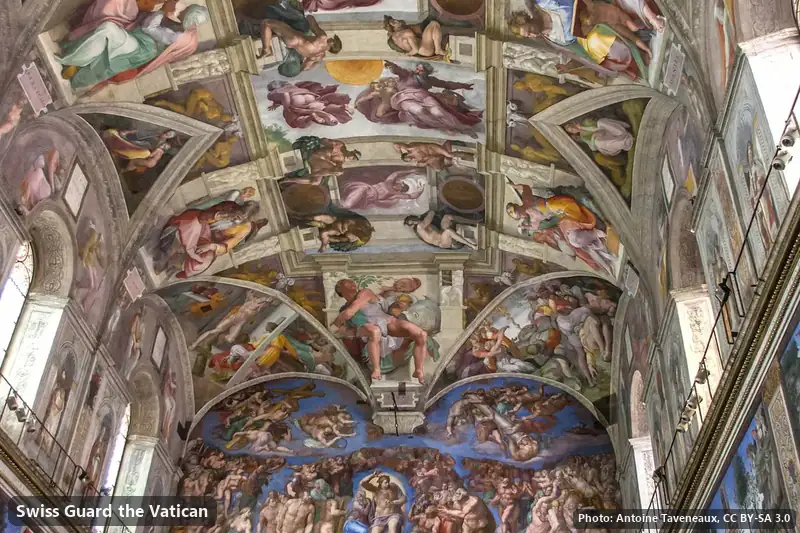
How should you plan the day around the guards and the museums?
Plan the day by starting at the entrances and then heading to your timed museum slot. A realistic day looks like this:
- Arrive early at the square and see the guard at the gate.
- Check your meeting point and be there fifteen minutes before your slot if the listing asks.
- Spend the museum slot on the galleries. One traveler review notes about four hours inside if you want to enjoy the museum properly.
- End at St. Peter’s Basilica, which is free but depends on crowd control.
If you are also visiting other sites, the other Rome attractions page covers tickets outside the Vatican. One example in the tour data is the Castel Sant’Angelo entry ticket at $25.07, which includes a digital audio guide, and the Castel is a short walk from the Basilica.
For a clear view of every ticket I recommend, all Vatican ticket guides are grouped in one hub.
Etiquette near the guards
Etiquette near the guards comes down to one idea: they are on duty, so treat them as you would a police officer at a post. Keep a respectful distance, do not block the entrance, and follow any instruction from them or from the Vatican gendarmes.
Dress rules apply to the Basilica and the Museums, so cover your knees and shoulders. The Vatican’s official site is the place to confirm current rules, because they can change.
Skip the ticket line: Rome: Vatican Museums & Sistine Chapel Skip-the-Line Ticket, from $40Check dates →What to do if a seller offers Swiss Guard tickets
If a seller offers Swiss Guard tickets, walk away. A seller promising “Swiss Guard Vatican tickets” at the gate is selling something that does not exist as described. At most, a legitimate product might bundle a museum entry with a guided tour that talks about the guard.
If a tour mentions the guard, check what you actually receive. The tour listings in this guide name what is included: entry, host, headsets, guide. Anything beyond that should be stated in writing, and the listing is the place to confirm it. The official ticket office is the Vatican itself, and this site is an independent guide that earns a commission on the booking links, so I want you to read the inclusions yourself.
Short on time? Vatican Museums, Sistine Chapel & St. Peter's Basilica Tour, from $60Book a slot →Quick wrap-up for your Swiss Guard Vatican tickets plan
Swiss Guard Vatican tickets in practice mean a ticket to the Vatican Museums, because the guards are free to see at the gates. Book a timed museum slot, arrive early at the entrances for your photo, and treat the Basilica as a free extra that depends on crowd control.
My recommendation is to pick one of the entry tickets above, confirm the hours on the official Vatican Museums site, and arrive fifteen minutes early if your listing asks. If you want to compare every option, the Vatican tickets guide lays them out in one place.
Prefer a guide? Rome: Vatican Museums, Sistine Chapel & Basilica Tour, from $71See tours →Top-rated Vatican tickets and tours
Vatican: Museums & Sistine Chapel Entrance Ticket
Powered by GetYourGuide · affiliate link
Rome: Vatican Museums & Sistine Chapel Skip-The-Line Ticket
Powered by GetYourGuide · affiliate link
Vatican Museums & Sistine Chapel Skip-the-Ticket-Line Tour
Powered by GetYourGuide · affiliate link
Frequently asked questions
What do Swiss Guards do?
The Pontifical Swiss Guard constantly monitors the safety of the pope and his residence. It also accompanies the pope on apostolic journeys, guards the accesses to Vatican City State and protects the College of Cardinals when the papal see is vacant.
Why is there a Swiss Guard at the Vatican?
Pope Julius II founded the corps in 1506 after asking the Swiss Diet for a permanent force of Swiss soldiers. Swiss troops were seen as strong and loyal, and the corps has served the popes ever since.
What are the Swiss Guard qualifications?
Candidates must be unmarried Swiss Catholic men between 19 and 30, at least 174 cm tall. They must have completed basic training with the Swiss Armed Forces and hold a professional diploma or high school degree.
Where are Swiss Guards from?
The Swiss Guard is a military body made up of Swiss citizens. Its recruits come from Switzerland, and the corps keeps websites in German, French and Italian.
How many Swiss Guards are there?
The official structure fixes the corps at 135 members: 85 halberdiers plus officers and non-commissioned officers. That is the number Wikidata also lists for 2024.
Keep planning your visit
More Vatican Tickets guides
Online Vatican Tickets is an independent visitor guide. Prices and hours change: check the official Vatican Museums website before you go. Tour links are GetYourGuide affiliate links.