In this guide ▾
Musei is simply the Italian word for museums, but when travelers type it while planning a trip to Rome, they almost always mean the Musei Vaticani, the Vatican Museums. I’ll explain what these museums are, when they open, how to get in and which kind of ticket fits which kind of visitor. Prices and hours change, so I point you to the official pages for anything you must confirm.
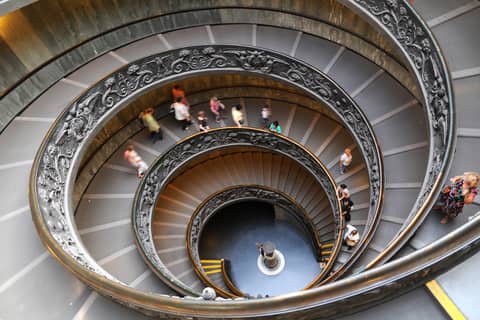
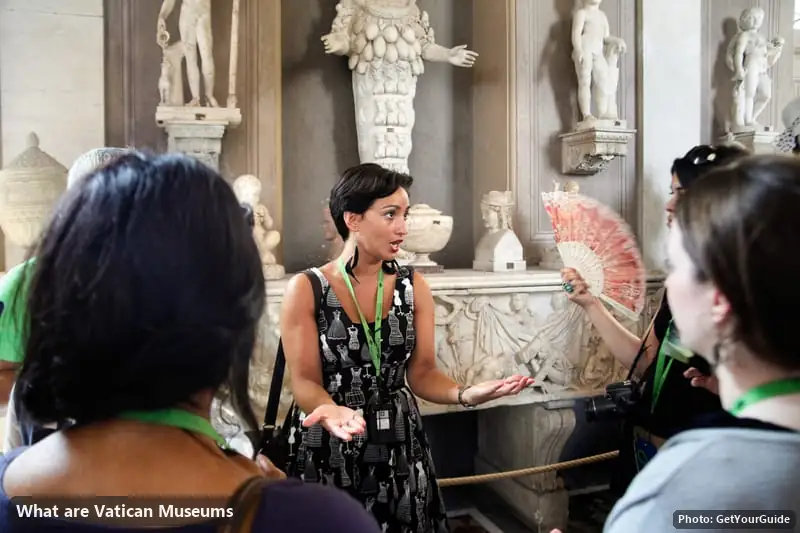
The Vatican Museums are the public museums of Vatican City, and they show works gathered by the Catholic Church and the papacy over centuries, according to Wikipedia. Think of them as one very long route, not a single building with a single room.
What Are the Musei Vaticani?
The Musei Vaticani are the Vatican Museums, Vatican City’s public art and antiquities museums. Their holdings come to roughly 70,000 works, with about 20,000 on display, and 640 people work across 40 administrative, scholarly and restoration departments, per Wikipedia.
The name trips people up. In Italian, musei is plural, so “Musei Vaticani” literally means “Vatican museums.” That is accurate, because the complex is a set of museums, galleries and chapels strung together. The official website lists the Gregorian Egyptian Museum, the Gregorian Etruscan Museum, the Pio Clementino Museum, the Chiaramonti Museum, the Pinacoteca, the Sistine Chapel, Raphael’s Rooms and the Borgia Apartment, among many others.
One more point of confusion: the Musei Vaticani are not the same thing as St. Peter’s Basilica. They are a separate visit with a separate entrance, which I cover below.
 Want a closer look? Vatican: Museums & Sistine Chapel Entrance Ticket, from $36See times →
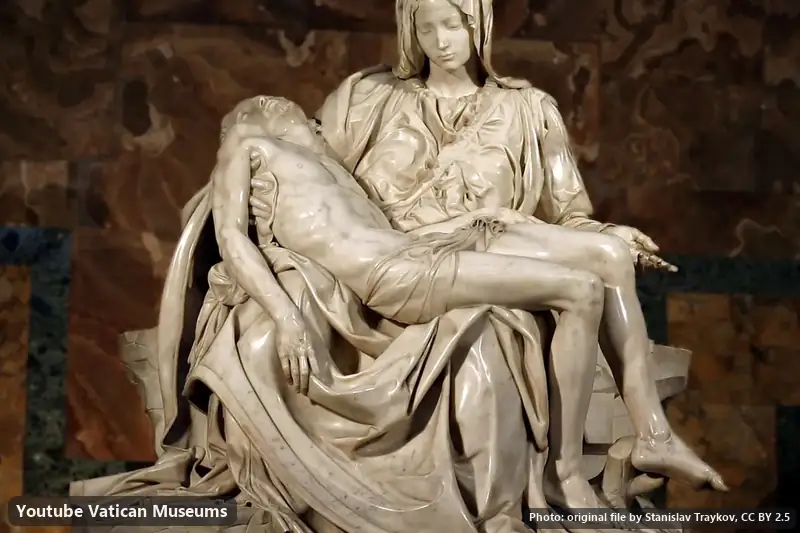
Vatican Museums History and Collections Explained
Vatican Museums history begins with a single marble sculpture. Laocoön and His Sons was discovered on 14 January 1506 in a vineyard near Santa Maria Maggiore, and Pope Julius II bought it and put it on public display one month later, as Wikipedia records. Wikidata gives 1506 as the founding year and 1771 as the year of official opening.
 Book aheadVatican: Museums & Sistine Chapel Entrance TicketCheck availability · from $36
Two highlights shape most visits:
- The Sistine Chapel. Julius II asked Michelangelo to paint the ceiling, finished in October 1512, and the Pope inaugurated the chapel with a Mass on 1 November that year, per the Vatican Museums’ own history page. The chapel is the last room on the route.
- Raphael’s Rooms. Wikipedia notes that the Stanze di Raffaello, decorated by Raphael, sit on the visitor route alongside the Sistine Chapel.
The Pinacoteca, the painting gallery, was inaugurated on 27 October 1932 in a building designed by Luca Beltrami. According to Wikipedia, it holds Giotto’s Stefaneschi Triptych, Raphael’s Transfiguration, Leonardo da Vinci’s Saint Jerome in the Wilderness and Caravaggio’s The Entombment of Christ. If paintings are your priority, my notes on the Pinacoteca and the other Vatican Museum paintings go gallery by gallery.
The Collection of Modern Religious Art was added in 1973. It includes works by artists such as Van Gogh, Chagall, Dalí and Picasso, per the same Wikipedia entry.
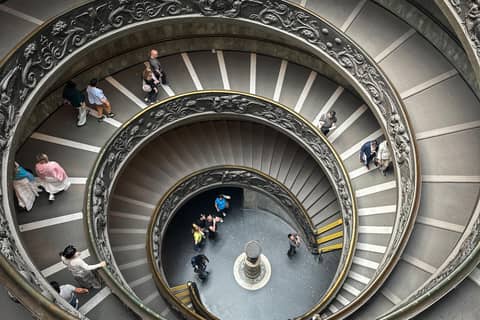 Skip the ticket line: Vatican Museums & Sistine Chapel Skip-the-Line Entry Ticket, from $53Check dates →
How Do I Get Into the Musei Vaticani?
Getting into the Musei Vaticani takes a timed entry ticket bought online before your visit, followed by a security check at the entrance on Viale Vaticano. I strongly advise booking ahead, since turning up without a ticket can mean a long wait.
One Google Maps reviewer wrote that getting tickets online felt hard, so they arrived around 5 p.m., waited 30 to 40 minutes and then had to rush through the galleries before closing:
“Truly amazing. The photos you see online don’t do the place justice. Just standing in the halls admiring some of Ancient Greek/Ancient Rome/renaissance/baroque masterpieces is beyond words. Definitely worth going too. Getting tickets online is a nightmare, so we turned up at roughly 17:00 and waited for 30/40mims to get tickets. We managed to get round the gallaries before closure, but it was a bit of rush.”
That story shows the real risk. Final entry is at 6:00 p.m. and you must leave the halls 30 minutes before closing, so a late arrival squeezes the visit. If you want to see every ticket type side by side, start with Vatican tickets and pick the one that suits your day.
Your options fall into three groups:
- Entry ticket only. You go in on your own, often with an optional audio guide. This is the cheapest route and suits people who like to move at their own pace.
- Entry ticket with a host or meeting point. Some listings include a host who walks you to the entrance. Read the meeting point carefully, since the redemption office can be on a different street from the museum.
- Guided tour. A guide handles the route and explains the art. These cost more but remove the guesswork.
For a step-by-step walkthrough, see how to book the Vatican Museum in my booking guide. If you only need the basics of reserving a slot, Vatican Museums reservations explains how timed entry works.
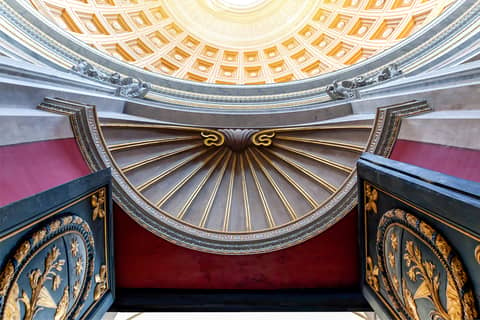 Short on time? Rome: Vatican Museums & Sistine Chapel Skip-The-Line Ticket, from $32Book a slot →
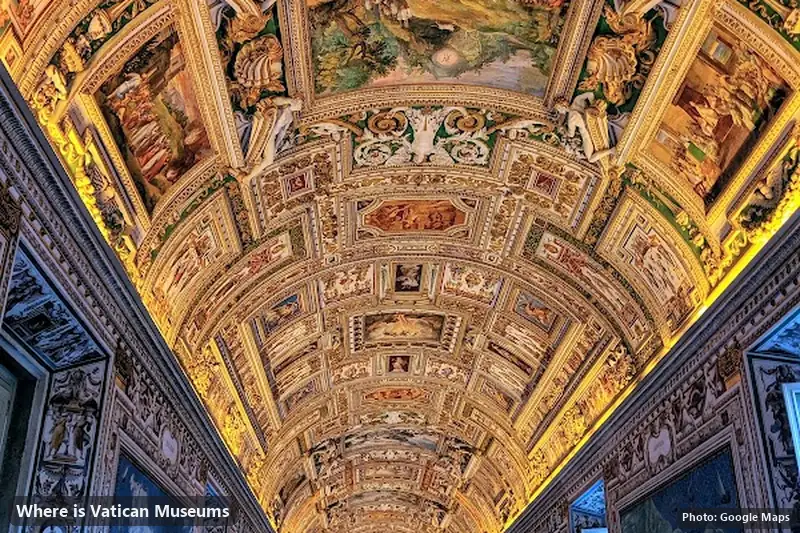
Musei Vaticani Opening Hours and Closures
Musei Vaticani opening hours run Monday to Saturday from 8:00 a.m. to 8:00 p.m., with the final entry at 6:00 p.m. The museums are closed on most Sundays, but they open on the last Sunday of each month from 9:00 a.m. to 2:00 p.m. with free entry and a last entry at 12:30 p.m., per the official hours page.
The same page lists these closure dates:
- 1 and 6 January
- 11 February
- 19 March
- 6 April
- 1 May
- 29 June
- 14 and 15 August
- 1 November
- 8, 25 and 26 December
The last Sunday of the month is not free of rules. It does not apply if it falls on Easter Sunday, 29 June, 25 December, 26 December or 31 December. Free Sundays also draw large crowds, so I’d only choose one if budget matters more than comfort. The official site also posts temporary closures of single sectors, such as the Sistine Chapel closing early on some December evenings, so check the page before you go. The official 2026-2027 calendar is the document to trust.
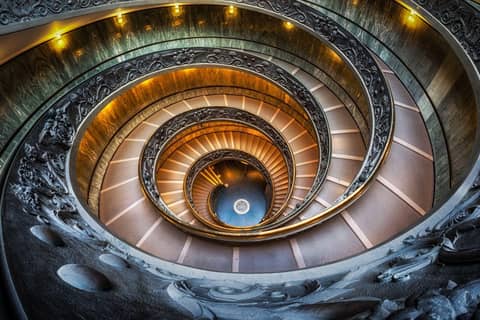 Prefer a guide? Vatican Museums, Sistine Chapel & St. Peter's Basilica Tour, from $60See tours →
How Much Do Musei Vaticani Tickets Cost?
Musei Vaticani tickets cost between about $32 for a plain skip-the-line entry and about $71 for a guided tour with St. Peter’s Basilica options when booked through GetYourGuide. Those are the prices shown at the time of writing and they can change, so confirm the final price at checkout. The official ticket office is at tickets.museivaticani.va, and I’m an independent guide, not the ticket office.
| Option | Price (USD) | Rating | Includes |
|---|---|---|---|
| Tours And Tours skip-the-line ticket | $32.31 | 4.23 | Museums and Sistine Chapel, host to the entrance |
| Museums and Sistine Chapel entrance ticket | $36.21 | 4.48 | Dedicated entrance, optional audio guide |
| Inside Out Italy skip-the-line ticket | $53.48 | 4.42 | Museums and Sistine Chapel, host on arrival |
| Enjoy Rome museums, Sistine and Basilica tour | $60.17 | 4.27 | Guided, 2 to 3 hours |
| Crown Tours museums, Sistine and Basilica tour | $71.31 | 4.65 | Licensed guide, headsets, Basilica options |
My advice is simple. If you love to wander, buy an entry ticket and add the audio guide. If you want context, pick a guided tour, since the Musei Vaticani are huge and easy to walk through without understanding what you see. Here are the tickets most travelers choose:
Vatican: Museums & Sistine Chapel Entrance Ticket
Powered by GetYourGuide · affiliate link
Vatican Museums & Sistine Chapel Skip-the-Line Entry Ticket
Powered by GetYourGuide · affiliate link
Rome: Vatican Museums & Sistine Chapel Skip-The-Line Ticket
Powered by GetYourGuide · affiliate link
Travelers on the first listing note that timed entry makes access easier and that audio guides let them explore at their own pace. One reviewer put it this way:
“value for money. I am glad that I choose this option. really helpful. thank you”
For a deeper look at what each pass includes, my guides to Vatican Museum tickets and the Vatican Museum pass compare the options in detail.
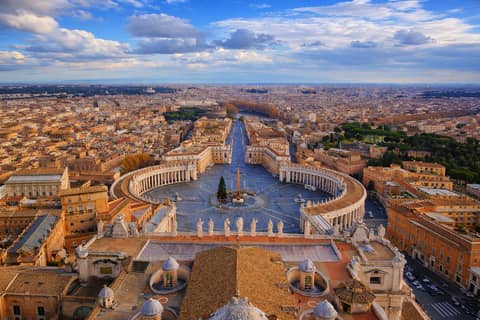 Planning ahead? Rome: Vatican Museums, Sistine Chapel & Basilica Tour, from $71Check availability →
Where Are the Musei Vaticani and How Do I Get There?
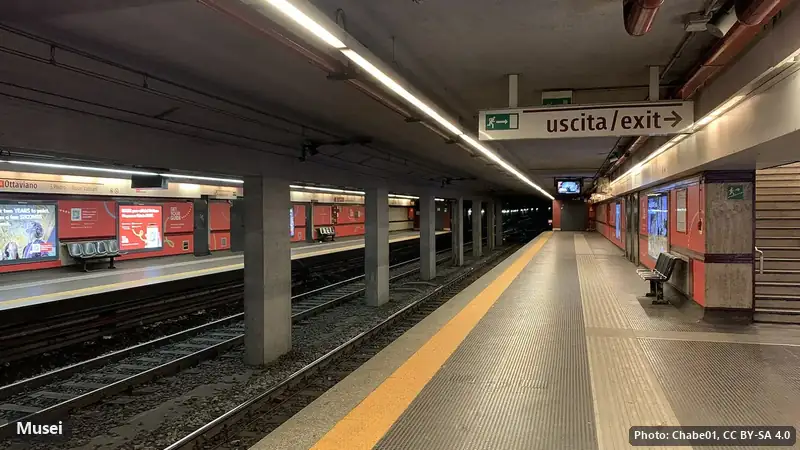
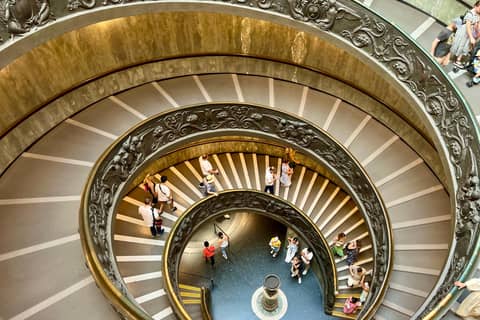
The Musei Vaticani are located in Vatican City, at 00120 Città del Vaticano, and the visitor entrance is on Viale Vaticano. Your nearest Rome Metro stop is Ottaviano on Line A, officially named “Ottaviano – San Pietro – Musei Vaticani.”
As Wikipedia puts it:
“Ottaviano–San Pietro–Musei Vaticani, also just known as Ottaviano, is a station on Line A of the Rome Metro.”
That station opened on 16 February 1980 and sits at the junction of Viale Giulio Cesare, Via Ottaviano and Via Barletta in the Prati district, per the same source. One tour listing says the Ottaviano stop is a 10-minute walk from its meeting office, so plan your timing.
The most common mistake I see is mixing up St. Peter’s Square with the museum entrance. They are different places, and one listing warns that St. Peter’s Square is not its meeting point. Redemption points also vary: one ticket asks you to redeem at Via Germanico 8 and arrive 15 minutes early, while another uses an office at Via Sebastiano Veniero 74. Always read your voucher before you leave your hotel. For a floor plan of what is inside, see my Vatican Museum map.
Vatican Museums
Art museum · ★ 4.6 · 213,480 Google reviews
00120 Città del Vaticano, Vatican City
Opening hours
- Friday8 am–8 pm
- Monday8 am–8 pm
- Saturday8 am–8 pm
- SundayClosed
- Thursday8 am–8 pm
- Tuesday8 am–8 pm
- Wednesday8 am–8 pm
Caffè Delle Commari
Restaurant · ★ 4.8 · 18,097 Google reviews
Via Santamaura, 22, 00192 Roma RM, Italy
Opening hours
- Friday6:45 am–10:30 pm
- Monday6:45 am–10 pm
- Saturday7 am–10 pm
- Sunday7 am–10 pm
- Thursday6:45 am–10 pm
- Tuesday6:45 am–10 pm
- Wednesday6:45 am–10 pm
 Most booked this week: Rome: Vatican Museums, Sistine Chapel and Basilica Access, from $68See prices →
Is the Vatican the Same as the Vatican Museums?
The Vatican is not the same as the Vatican Museums: the Vatican, meaning Vatican City, is a sovereign state, and the Musei Vaticani are just one of the things inside it. Wikidata lists Vatican City’s area as 0.44 km² and notes that it holds World Heritage status, which is why a small country can host such big collections. For the full picture of the state, my Vatican pillar guide is the place to start, and the About Vatican City hub collects the related questions.
In practice, that means three separate visits are possible: the museums with the Sistine Chapel, St. Peter’s Basilica, and the dome. A museum ticket does not automatically include the Basilica. One listing explicitly excludes “Ticket to St. Peter’s Basilica (free of charge, but access is not guaranteed. It may vary due to crowd control)” and the dome. Plan them as separate stops, or choose a tour that bundles them.
If you want an expert along for the route, the Vatican Museum tour page compares the guided options in more depth. The tours below combine the museums, the Sistine Chapel and the Basilica:
Vatican Museums, Sistine Chapel & St. Peter's Basilica Tour
Powered by GetYourGuide · affiliate link
Rome: Vatican Museums, Sistine Chapel & Basilica Tour
Powered by GetYourGuide · affiliate link
Best value pick: Vatican: Museums & Sistine Chapel Entrance Ticket, from $36View dates →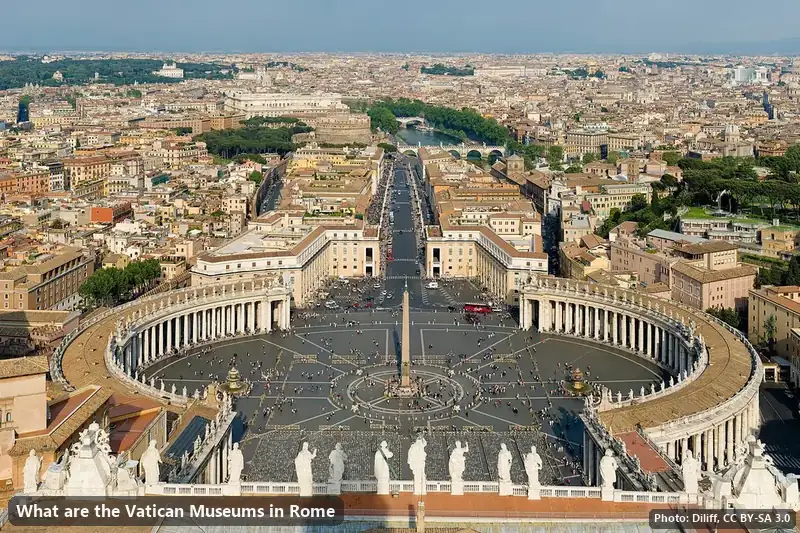
Musei Vaticani by the Numbers
Musei Vaticani numbers worth knowing for planning are listed here, all taken from Wikidata:
- 1506: the founding year of the Musei Vaticani, per Wikidata. That makes the collection more than five centuries old.
- 1771: the year of official opening, per Wikidata. The museums were not public from day one.
- 1,612,530: visitors in 2021, per Wikidata. That was a pandemic-affected year, so treat it as a low point. Wikipedia reports 6.8 million visitors in 2024, which placed the museums second among the world’s most-visited art museums after the Louvre.
- 0.44 km²: the area of Vatican City, per Wikidata. Everything is walkable.
- 949: Vatican City’s population in 2024, per Wikidata. A tiny state receives millions of guests.
- 1980: the opening year of Ottaviano metro station, per Wikidata, the stop most visitors use.
The takeaway is crowds. With millions of annual visitors in a state of 0.44 km², a skip-the-line timed slot is not a luxury. It is how you protect your day.
Going with family? Vatican Museums & Sistine Chapel Skip-the-Line Entry Ticket, from $53Compare tickets →Planning Your Musei Vaticani Day: Food and Nearby Stops
Planning your Musei Vaticani day starts with meals: eat before or after your slot rather than during it, because the route is long and you need to keep moving. Several well-reviewed restaurants sit within a short walk. Google Maps lists Caffè Delle Commari at Via Santamaura 22, rated 4.8, and Ristorante Pizzeria Marcantonio on Borgo Pio, rated 4.6. Ristorante Pizzeria Castello on Via delle Fornaci is rated 4.7, and one diner described it as an excellent lunch after a long Vatican tour:
“Had an excellent lunch here at Castello after a long Vatican tour. The staff is very polite and helpful, and the food is soo good! We have the primavera pizza, pesto pasta, and the tiramisu. Shoutout to Carmel, Mostafa, and Islam for their service and our friend Sam for recommending this place. Would come here everytime I'm in Rome.”
I’d structure the day like this: arrive 15 to 30 minutes before your time slot, spend two to three hours inside, then eat. Most tours list two to three hours for the museums and Sistine Chapel, and the self-guided ticket lists the full day because you can stay until closing. Leave the halls 30 minutes before close.
If you are still deciding, I’d book a skip-the-line option after you pick your date. It is the single best fix for queue stress. Once you know the day, compare Vatican tickets one more time, since slots go first on weekends.
Want a closer look? Rome: Vatican Museums & Sistine Chapel Skip-The-Line Ticket, from $32See times →Final Tips for Your Musei Vaticani Visit
Visiting the Musei Vaticani well comes down to booking a timed slot, arriving early and checking the official calendar for closures. Dress respectfully, since this is a religious site, and confirm the dress and bag rules on the official site before you go.
Here is my short checklist:
- Book a timed entry ticket before you travel, ideally with an audio guide or a guide.
- Confirm the date is not a closure day on the official hours page.
- Read your voucher for the exact meeting point.
- Arrive early, since late arrivals may not get skip-the-line access.
- Save the Sistine Chapel for the end, because it is the last room on the route.
Musei may be a plain Italian word, but the Musei Vaticani reward a little planning. Pick your ticket, check your date and give the collections the unhurried hours they deserve.
Skip the ticket line: Vatican Museums, Sistine Chapel & St. Peter's Basilica Tour, from $60Check dates →Top-rated Vatican tickets and tours
Vatican: Museums & Sistine Chapel Entrance Ticket
Powered by GetYourGuide · affiliate link
Vatican Museums & Sistine Chapel Skip-the-Line Entry Ticket
Powered by GetYourGuide · affiliate link
Rome: Vatican Museums & Sistine Chapel Skip-The-Line Ticket
Powered by GetYourGuide · affiliate link
Frequently asked questions
What is a museum collection?
A museum collection is the group of objects a museum owns, studies and shows. The Vatican Museums hold roughly 70,000 works, of which about 20,000 are on display, according to [Wikipedia](https://en.wikipedia.org/wiki/Vatican_Museums).
Are museums free for seniors?
There is no single rule, so check each museum. For the Musei Vaticani, the [official hours page](https://www.museivaticani.va/content/museivaticani/en/info/orari-musei-vaticani.html) lists free entry on the last Sunday of the month for everyone. Ask the official ticket office about any age-based discount.
What does musei mean in Italian?
Musei is the plural of museo, so it means museums. Musei Vaticani is the Italian name of the Vatican Museums, and Latin speakers know them as Musea Vaticana.
How many galleries are in the Musei Vaticani?
Wikipedia counts 24 galleries or rooms in total, with the Sistine Chapel as the last room on the route. The official site also lists Raphael's Rooms, the Pinacoteca and the Borgia Apartment among the sections.
Are the Musei Vaticani open on Sundays?
Only on the last Sunday of each month, from 9:00 a.m. to 2:00 p.m. with free entry and a last entry at 12:30 p.m. Other Sundays are closed, as are several holidays listed on the official calendar.
Keep planning your visit
More About Vatican City guides
Online Vatican Tickets is an independent visitor guide. Prices and hours change: check the official Vatican Museums website before you go. Tour links are GetYourGuide affiliate links.